
Your Shower Routine Has Blind Spots — Here Are the Spots Most of Us Skip
A head-to-toe guide to the spots your shower routine is probably missing — and why they matter more than you think.
Every good detective knows that the clues hiding in plain sight are often the most revealing. The same principle applies to personal hygiene.
Most of us have a shower routine we could perform on autopilot — and frankly, sometimes we do. Shampoo, body wash, rinse, done. Fast, efficient, and functional. It feels thorough because it’s habitual. But habit and thoroughness aren’t always the same thing.
The truth is, certain parts of the body — because they’re awkward to reach, easy to overlook, or simply never discussed — tend to get a quick splash at best and completely skipped at worst. And these are often the exact spots where bacteria, fungi, dead skin cells, and trapped moisture love to quietly set up shop.
This isn’t about being squeaky clean for its own sake. It’s about understanding that your skin is your largest organ, and its surface is home to a complex community of microorganisms — your skin microbiome — that plays a direct role in your immune health, inflammation levels, and even how your body smells. When certain areas are neglected, that microbial balance can tip in the wrong direction, leading to irritation, odour, infection, or chronic low-grade inflammation that shows up in ways that seem completely unrelated.
Think of this article as a hygiene audit — a friendly, head-to-toe investigation of the spots most of us rush past, and what a little more intention there can do for your overall health.
Want to understand the deeper connection between your skin, your microbiome, and your gut? Check out our companion article: Gut Health and Personal Hygiene: What Your Body Is Trying to Tell You.
Armpits: More Than Just a Deodorant Destination
The underarms get plenty of product attention — deodorant, antiperspirant, the occasional razor — but not always much cleaning attention. There’s a difference.
The armpit is warm, frequently moist, and densely packed with apocrine sweat glands (the ones most associated with body odour), along with a rich and active community of skin bacteria. Left uncleaned properly, this environment becomes a very hospitable place for odour-causing bacteria and product build-up to accumulate — and no amount of deodorant will fully compensate for that.
What to do:
- Wash with intention. Don’t just let soapy water drift over the area. Use a gentle cleanser and work it into the skin with your fingers.
- Exfoliate occasionally. Once or twice a week, a gentle exfoliation — a soft washcloth, a natural loofah, or a simple sugar scrub — removes dead skin cells and the deodorant residue that quietly builds up and can clog pores over time.
- Rinse thoroughly. Product residue left sitting on the skin alters the local microbiome and can cause irritation or darkening of the skin over time.
- Let them breathe. Give your underarms a few minutes without product after showering. Applying deodorant to completely dry skin is also significantly more effective.
Quick note if you shave: Freshly shaved skin has micro-abrasions. Give it a few minutes before applying any product to avoid unnecessary irritation.
The Belly Button: Small but Surprisingly Significant
The belly button is arguably the most ignored spot on the entire body — until it starts to announce itself with an unpleasant odour or unusual discharge. By that point, the microbiome in there has usually been left to its own devices for quite some time.
Here’s a genuinely surprising fact: researchers have identified an average of around 67 different bacterial species living in the average belly button. It’s a warm, sheltered, often-damp little pocket — which makes it an ideal environment for microbial life to flourish, for better or worse.
The good news is that this is entirely preventable with about 30 extra seconds of attention in the shower.
What to do:
- Gently clean inside the navel with a soft cloth or cotton tip and a small amount of mild soap.
- Rinse thoroughly — leftover soap residue can itself become an irritant.
- Dry it completely. This is the most critical step. Trapped moisture is the primary driver of bacterial and fungal overgrowth in the navel. After your shower, pat or gently swab the inside dry. If you have a deeper navel, this step is especially important as moisture can linger long after the rest of you has dried off.
Fingernails: The Detail That Hides a Lot
Your hands are in constant contact with the world — door handles, keyboards, phones, food, your face. And the space beneath your fingernails is remarkably efficient at collecting everything those surfaces have to offer: dirt, bacteria, debris, and microorganisms that you’d rather not be transferring anywhere else.
This isn’t just a cosmetic concern. The underside of fingernails is a well-documented reservoir for bacteria including Staphylococcus aureus and E. coli — organisms that can cause skin infections or digestive illness when transferred to food or touched to mucous membranes. Longer nails — natural or otherwise — simply provide more real estate for accumulation.
What to do:
- Keep a dedicated, clean nail brush in your shower and use it regularly to scrub under and around the nails — particularly after cooking, gardening, or any hands-on work.
- Keep your nail brush itself clean and fully dry between uses; a damp brush sitting in a corner grows bacteria quickly.
- Don’t neglect the skin around the nails — the cuticle area and nail folds can harbour bacteria and fungi, especially if the skin is cracked or damaged.
- Keep nails trimmed to a practical length where possible.
- Acrylic and gel nails deserve a conversation of their own — the gap between an artificial nail and the natural nail bed creates a uniquely warm, moist environment that requires specific hygiene strategies. [Coming soon: The Hidden Hygiene Risks of Artificial Nails — and How to Protect Your Nail Health]
The Groin Area: Your Lymphatic Neighbourhood
This is the area people are most likely to clean quickly and move on from, which is understandable — but it’s worth knowing that the groin is home to a significant concentration of lymph nodes, a high density of sweat glands, and skin folds that trap heat and moisture efficiently. It’s one of the areas most prone to fungal overgrowth (think: jock itch, yeast-related irritation) and bacterial imbalance.
Skipping thorough cleaning here — or conversely, using harsh, heavily fragranced soaps that disrupt the local pH — can both lead to problems.
What to do:
- Use a gentle, unscented or mildly scented cleanser. The skin in this region is sensitive and the local microbiome is easily disrupted by harsh products.
- Clean all skin folds thoroughly — this is where moisture accumulates most.
- Rinse completely. Any soap residue in skin folds can cause itching and irritation.
- Dry thoroughly after showering, including in the skin folds, before getting dressed. Moisture trapped against the skin under clothing creates exactly the warm, damp conditions that fungi prefer.
- Breathable, natural fibre underwear makes a meaningful difference here — your skin microbiome will notice.
Behind the Ears: The Spot Almost Everyone Forgets
Ask anyone whether they wash behind their ears and most will say yes — but a surprising number of people do it rarely or not at all. It’s one of those instructions we heard as children that somehow didn’t fully make it into adult habits.
The skin behind the ears is prone to accumulating a combination of sebum (skin oil), sweat, hair product residue, and dead skin cells. It’s also a common spot for seborrhoeic dermatitis — a flaky, irritated skin condition driven by an imbalance in the skin microbiome — to develop quietly. People often mistake the flakiness for dry skin and ignore it, not realising it has a microbial component.
What to do:
- Include the area behind and around the ears in your regular wash — it takes seconds and makes a genuine difference.
- If you use hair products, be aware that these often migrate to the skin behind the ears and along the hairline; residue build-up is common here.
- If you wear glasses, earbuds, or hearing aids, these devices rest directly on this skin and should be cleaned regularly — they can transfer bacteria and oils back onto the skin repeatedly if neglected.
Your Back: Out of Sight, Out of Mind
The back is one of the hardest areas of the body to clean well, which is precisely why it tends to be under-cleaned. A rinse in the shower doesn’t necessarily translate to a thorough clean — particularly for the mid-back and lower back areas that are difficult to reach with a standard washcloth.
The back also has a high concentration of sebaceous glands, making it one of the more common sites for body acne, clogged pores, and folliculitis (inflammation of the hair follicles). If you exercise regularly and then sit in damp, sweaty clothing, or if you use heavy body lotions or oils without cleansing properly, the back is often where the consequences show up first.
What to do:
- A long-handled body brush or exfoliating back scrubber is genuinely worth the investment if you don’t already have one. It makes a noticeable difference in your ability to actually cleanse the skin rather than just rinse it.
- Exfoliate the back periodically — weekly if you’re prone to back breakouts, or every couple of weeks as general maintenance.
- If you exercise, shower as soon as reasonably possible afterward rather than sitting in workout gear. Sweat sitting against the skin on the back is one of the most common triggers for back breakouts.
- Rinse shampoo and conditioner off thoroughly — these products running down the back during rinsing and sitting on the skin are a frequently overlooked contributor to back acne.
Feet and Between the Toes: The Foundation That Deserves More Love
Your feet carry you through your entire day, are often enclosed in shoes and socks for hours at a time, and are thoroughly under-appreciated when it comes to hygiene. Most people wash their feet by letting soapy water run over them in the shower — which genuinely does very little.
The space between the toes is particularly important and particularly neglected. This area is dark, warm, and frequently damp — ideal conditions for fungal growth. Athlete’s foot (tinea pedis) is one of the most common fungal infections in adults, and it thrives exactly in this environment.
If you are living with diabetes, foot hygiene moves from a good habit to an essential one. Reduced circulation and nerve sensitivity in the feet mean that small cuts, cracks, or fungal infections can go unnoticed and escalate quickly. A daily visual check of your feet — looking for any redness, cuts, blisters, or changes in skin texture — is just as important as the cleaning itself. If anything looks unusual, don’t wait to have it assessed.
What to do:
- Actually wash your feet with soap and a cloth or brush — don’t rely on runoff.
- Clean deliberately between each toe. This takes an extra minute and makes an outsized difference.
- Use a foot brush or pumice stone on the heels and balls of the feet regularly to prevent the build-up of hard, cracked skin. Cracked heels aren’t just uncomfortable — they’re entry points for bacteria.
- Dry between your toes thoroughly after showering. This single step is one of the most effective ways to prevent fungal infections.
- Let your feet breathe when you’re at home — shoes and socks all day creates the warm, moist environment that fungi love. Going barefoot at home (on clean surfaces) gives your skin microbiome a chance to breathe.
Try this: Our Warming Turmeric and Ginger Anti-Inflammatory Foot Soak is a lovely way to soften skin, reduce inflammation, and give your feet the attention they actually deserve after a long day. Note for those with diabetes: check with your healthcare provider before using foot soaks, as water temperature sensitivity can be a concern.
Building a More Intentional Routine
You don’t need a dramatic overhaul of your shower routine to address all of this. A few small, deliberate additions will do the job — the key is intention over speed.
A few simple tools worth having:
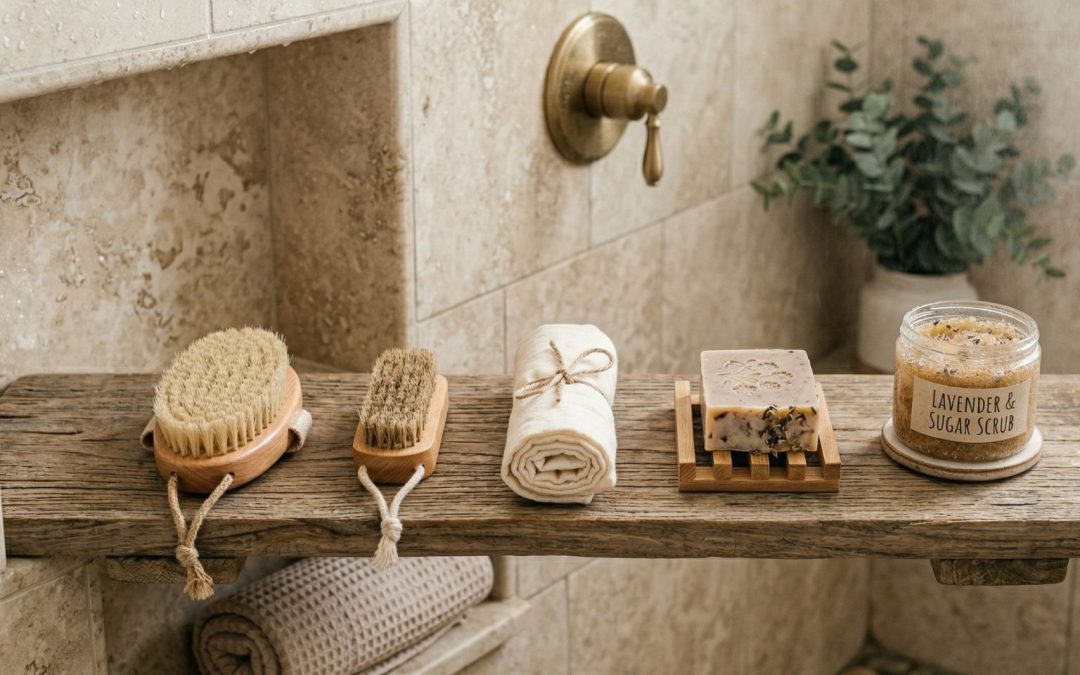
- A natural nail brush (kept clean and dry)
- A long-handled back brush or exfoliating strap
- A foot brush or pumice stone
- A soft exfoliating cloth for underarms and general use
- A gentle, fragrance-free cleanser for sensitive areas
And the habits worth building:
- Dry thoroughly — especially in skin folds, between the toes, and in the navel. Moisture left behind is where most problems begin.
- Exfoliate the areas that collect dead skin and product build-up — armpits, back, heels — a couple of times a week.
- Clean your hygiene tools regularly. A dirty brush or mouldy loofah introduces more problems than it solves.
Your shower doesn’t need to become an hour-long spa ritual. It just needs a few more minutes of deliberate attention in the right places.
Closing the Case
A few extra minutes of attention in the right places can make a genuine difference — and now you know exactly where to look.
But if you’ve been thorough, consistent, and still not getting the results you’d expect? The investigation doesn’t end in the bathroom. Sometimes the most important clues are coming from somewhere much deeper.
We’re going there tomorrow. Gut Health and Personal Hygiene: What Your Body Is Trying to Tell You — Case #11.

More to Explore
LADA: The Autoimmune Diabetes Hiding Behind a Type 2 Diagnosis
Decode LADA, the autoimmune diabetes often mistaken for type 2. Uncover how it starts, the usual age of onset, and the two tests doctors rarely order.

5 Smart Food Pairings for Better Nutrient Absorption
Decode the viral food-pairing post — and uncover the gentle seasonal reset underneath: five smart nutrient pairings, and the humble fibre that clears the way.

What You’re Really Carrying: The Hidden Weight Behind “Hands-Free”
Uncover how the bags, phone cords, and earbuds you wear every day quietly load your neck and spine — and what the evidence says about fixing it.