
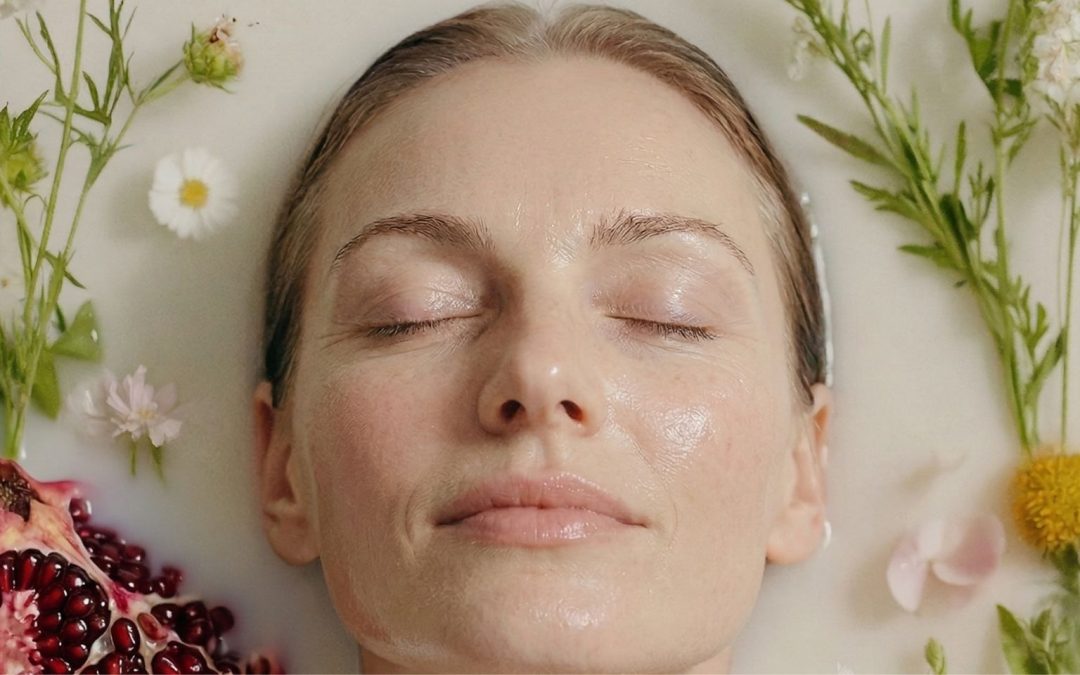
What Your Skin Is Trying to Say — And How to Finally Listen
Itchy eyes, breakouts, random rashes — spring brings more than blossoms.
Your Skin Is Not the Problem — It’s the Messenger
Imagine your skin as the front window of your house. When things are running smoothly inside — good airflow, clean surfaces, no leaky pipes — that window looks clear and bright. But the moment something goes sideways behind the walls? The window fogs up, the paint starts to peel, or something strange starts showing through the glass.
That’s exactly what your skin is doing.
Whether it’s a fresh crop of teenage pimples, a mysterious adult breakout that showed up at 47, or a rash that seems to appear every spring like an uninvited guest — your skin is not the problem. It’s the signal. And learning to read it is one of the most powerful things you can do for your overall health.
As a Health Detective, this is one of my favourite areas to investigate. Because once we start asking why the skin is responding the way it is, the real story begins to unfold.
From Teenage Breakouts to Adult Acne: What’s Actually Going On?
Here’s what’s actually happening beneath the surface.
In the Teen Years
Rising androgens — hormones like testosterone that both boys and girls produce — signal the skin’s oil glands to work overtime. More oil means more opportunity for bacteria to thrive, which leads to inflammation and breakouts. But here’s what we often miss: the gut microbiome is deeply involved in how those hormones are processed and cleared. A gut that’s out of balance can lead to hormones being recirculated rather than eliminated, keeping that inflammatory cycle spinning.
In Your 30s, 40s, and Beyond
Adult-onset acne is a different creature entirely — and it catches a lot of women off guard. You made it through your teens relatively unscathed, or you thought you’d left all that behind, and then suddenly at 43 you’re breaking out along your jawline like you’re back in high school.
Welcome to the hormonal shift zone.
Perimenopause and menopause bring fluctuating oestrogen and progesterone levels, which tip the balance toward relatively higher androgens — and the skin responds accordingly. But that’s only part of the story. Elevated cortisol from chronic stress, blood sugar spikes from refined carbohydrates, a sluggish liver that isn’t clearing hormones efficiently, and gut dysbiosis all play significant roles.
Adult acne showing up along the jawline and chin? That’s often a hormonal flag. Across the forehead? Could be a digestive or liver connection. Around the nose and cheeks? Sometimes a dairy or sugar link. The skin is speaking a very specific language — you just need a translator.
Rashes Out of Nowhere? Meet Oral Allergy Syndrome
It’s spring. The Alder and Birch trees are flowering — as they do every March and April here in the Lower Mainland and throughout BC. You start noticing a tingling or itching in your mouth when you eat an apple. Or maybe your lips feel swollen after a handful of almonds. Or you get an itchy throat after eating a raw carrot. And then a rash appears on your skin that seems to come out of nowhere.
You assume it’s a seasonal pollen allergy. Reasonable guess. But there’s a fascinating twist.
What you may actually be experiencing is called Oral Allergy Syndrome (OAS), also known as pollen-food allergy syndrome. Here’s how it works: your immune system, primed to react to Birch or Alder pollen, becomes confused by certain raw foods that contain proteins structurally similar to those pollens. Your body essentially mistakes the food for the pollen and mounts the same allergic response.
This cross-reactivity is more common than most people realise, and it can absolutely show up on the skin as hives or a rash — not just in the mouth.
Wait — Is It Really Pollen You’re Reacting To?
Here’s where it gets interesting from a Health Detective perspective.
Birch pollen cross-reacts with: apples, pears, peaches, plums, cherries, apricots, almonds, hazelnuts, walnuts, carrots, celery, parsley, kiwi, and even some soy products.
Alder pollen cross-reacts with: many of the same fruits, plus hazelnuts and cherries.
So you might eat an apple in January with no reaction whatsoever — then bite into the same type of apple in late March when pollen counts are climbing, and suddenly your mouth is tingling and you’ve got a rash on your arms by evening. The food didn’t change. Your immune system’s background level of reactivity did.
Here’s the important distinction: OAS reactions are usually mild and short-lived, and they often disappear when the food is cooked — because heat changes the protein structure. If you’re having a severe reaction — throat tightening, difficulty breathing, significant swelling — that is a different situation requiring medical attention, not a wait-and-see approach.
But for many women experiencing that mysterious spring skin flare, the culprit isn’t a new allergy to apples. It’s a system that’s become overwhelmed and reactive — and that is something we can absolutely work with.
The Gut-Liver-Skin Connection (Your Internal Spring Thaw)
Think of your body as a house that’s been closed up all winter. The windows have been shut, the air has been circulating the same dust, and things have accumulated that weren’t there in September. Spring comes — and the house needs to breathe again.
Your liver, gut, and skin operate as a team in exactly this way.
Your liver is your primary detoxification organ. Every day, it processes hormones, metabolic waste, environmental toxins, and food byproducts, packaging them up for elimination. But when the liver is overburdened — from processed foods, alcohol, stress, medications, or simply the accumulated load of winter — it starts to fall behind. And when it can’t clear things fast enough? The body looks for other exit routes.
Enter: your skin.
The skin is sometimes called the “third kidney” — a secondary elimination organ that steps in when the primary pathways are congested. Breakouts, rashes, unusual dryness, excessive oiliness, eczema flares — these can all be signs that something is backing up upstream.
Your gut is the upstream player. If your intestinal lining is compromised — think of it like a garden hose with tiny holes, water leaking where it shouldn’t — partially digested food particles and bacterial by-products can enter the bloodstream, triggering immune responses that land on the skin. This is the gut-skin axis, and it is very, very real.
Add the spring pollen load on top of an already-reactive immune system and a liver that’s been quietly struggling, and suddenly that mystery rash makes a lot more sense.
Your Spring Tune-Up: A Gentle Detox That Actually Works
Here’s what I want you to hear clearly: when I say “detox,” I am not talking about a three-day juice fast, a box of supplements from the drugstore, or anything that leaves you feeling dizzy and miserable by Tuesday.
A real detox is more like a car tune-up. You’re not replacing the engine. You’re changing the oil, cleaning out the filters, checking the belts, and topping up the fluids so everything runs more smoothly. It’s maintenance, not a dramatic overhaul.
Here’s what that looks like in practice:
Support Your Liver — Gently
Bitter greens like dandelion, arugula, and radicchio stimulate bile production and help the liver move waste along. Cruciferous vegetables — broccoli, cauliflower, Brussels sprouts, cabbage — contain compounds that support your liver’s detoxification pathways. Lemon water first thing in the morning is a simple, time-honoured gentle liver nudge. Think of it as rinsing the pipes before you start the day.
Try the Spring Liver-Support Salad with Lemon-Tahini Dressing in Blueprint Kitchen to get started.
Hydrate Like It’s Your Job
Your liver and kidneys need adequate water to flush waste products through. Most of us are running slightly dehydrated all winter — heating systems are drying, and we reach for hot coffee more than water. Aim for 8–10 glasses of filtered water daily, and consider adding a pinch of good quality sea salt and a squeeze of lemon to one glass to support electrolyte balance.
Feed Your Gut What It Needs
Fermented foods like plain kefir, sauerkraut, kimchi, and plain yoghurt help replenish the beneficial bacteria that support skin health from the inside out. Prebiotic fibre from foods like leeks, garlic, asparagus — hello, spring! — and onions feed those beneficial bacteria so they can thrive.
This Spring Asparagus and Leek Gut-Support Soup is a perfect seasonal fit — find it in Blueprint Kitchen.
Reduce the Reactive Load
During the spring pollen season, if you notice OAS-type symptoms, try cooking your fruits and vegetables rather than eating them raw — just temporarily. Swap raw apple slices for warm stewed apple with cinnamon. Roast your carrots and beets rather than juicing them. You’re not eliminating these foods forever; you’re simply reducing the burden while your system recalibrates.
Move Your Lymph
Your lymphatic system doesn’t have a pump the way your cardiovascular system does — it relies on movement to flow. Daily walks, gentle rebounding on a small trampoline, dry brushing before your shower, or even gentle yoga can all support lymphatic drainage and reduce the accumulation of inflammatory byproducts that show up on skin.
Lower the Stress Dial — Even a Little
Cortisol is a significant driver of both acne and inflammatory skin conditions. It directly increases oil production, disrupts the gut lining, and suppresses immune regulation. I know “just stress less” is about as helpful as telling someone to “just relax” during turbulence — but small, consistent nervous system supports add up. Five minutes of slow breathing before meals. A short walk outside — yes, even when it’s drizzling; this is BC, after all. Legs up the wall before bed. These are not trivial. They are medicine.
What You Put On Your Skin Matters Too
While we’re doing the inside work, it’s worth taking a look at what’s going on the outside as well. During a reactive period, less really is more — strip back to a gentle cleanser, a good moisturiser, and SPF. Layering too many actives on an already-reactive skin barrier adds irritation rather than calm.
If you’re looking for a place to start simplifying your skincare, I’ll share what I personally use and love — Three Ships, a Canadian clean beauty brand whose ingredients read more like a kitchen cupboard than a chemistry lab. Their philosophy is exactly aligned with how I think about skin: what you put on your body matters just as much as what you put in it.
I had the lovely opportunity to meet co-founder Connie at a VIP event right here in Vancouver — a sauna and cold plunge session, fittingly enough — and her passion for clean, transparent ingredients is completely genuine. This is not a sponsored mention. Just a wholehearted recommendation from one health detective to you.
Small Shifts, Big Results
Your skin has been sending you messages. Spring is the perfect time to finally start reading them.
If you’re noticing breakouts that seem tied to your cycle, rashes that flare with the seasons, or skin that just never quite settles — those are breadcrumbs. And breadcrumbs are exactly what a Health Detective follows.
Your Next Step

More to Explore
LADA: The Autoimmune Diabetes Hiding Behind a Type 2 Diagnosis
Decode LADA, the autoimmune diabetes often mistaken for type 2. Uncover how it starts, the usual age of onset, and the two tests doctors rarely order.
5 Smart Food Pairings for Better Nutrient Absorption
Decode the viral food-pairing post — and uncover the gentle seasonal reset underneath: five smart nutrient pairings, and the humble fibre that clears the way.

What You’re Really Carrying: The Hidden Weight Behind “Hands-Free”
Uncover how the bags, phone cords, and earbuds you wear every day quietly load your neck and spine — and what the evidence says about fixing it.