
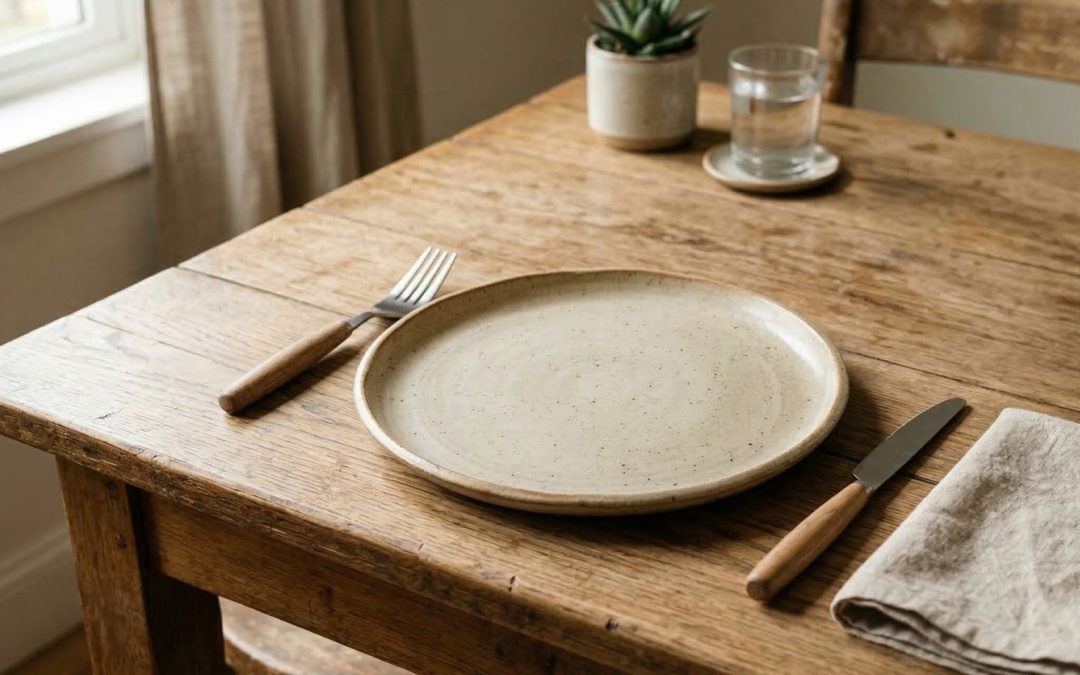
Inherited Plates: The Food Stories We Carry
Exploring the food stories we inherit — and the food patterns we have the power to reshape.
If we were sitting together right now — perhaps with tea, coffee, or something warm in hand — I might ask you a simple question.
What food from your childhood still carries a story?
Not necessarily your favourite food. Just one that holds a memory.
For some people it might be the soup that appeared on the stove whenever someone was sick. For others, it might be a dessert that showed up at every birthday or holiday gathering. Sometimes the memory is comforting. Sometimes it carries more complicated feelings.
Food memories rarely exist on their own. They are connected to family routines, culture, traditions, and the ways we were cared for.
Without realizing it, we inherit more than recipes.
We inherit food stories.
The Food Stories We Inherit
Some are practical.
“Finish what’s on your plate.”
“Don’t waste food.”
“Eat before you leave the house.”
Others appear in rituals — the meals served on Sundays, the foods prepared during holidays, or the dishes that always seem to show up whenever the family gathers together.
These traditions can be beautiful. They often reflect love, care, and a desire to bring people together.
But along with traditions, families sometimes pass down subtle beliefs about food.
Food can become comfort.
Food can become reward.
Food can become something to control.
Most of these patterns begin long before we are old enough to question them. They become part of everyday life.
By the time we reach adulthood, many of these habits feel automatic — not because we consciously chose them, but because they were simply the environment we grew up in.
When the Body Begins Leaving Clues
At some point, many people begin to notice small changes in how their body feels.
Energy dips earlier in the day.
Digestion may feel slower or more sensitive.
Sleep patterns might shift.
Cravings appear at certain times.
These signals often arrive quietly.
Because they are subtle, they are easy to dismiss or ignore.
We might assume they are simply part of getting older or part of living a busy life.
But sometimes the body is simply responding to patterns that have been present for many years — patterns that were inherited rather than consciously chosen.
This is where curiosity becomes powerful.
Instead of asking, “What’s wrong with me?” we begin asking a different question:
What might my body be trying to tell me?
Investigation Instead of Judgment
Most families did the best they could with the knowledge and resources they had at the time.
Food traditions often developed around culture, availability of ingredients, economic realities, and family routines.
In many cases, those patterns served an important purpose.
So the goal of this investigation is not to criticize the past.
It is simply to understand it.
When we approach our food history with curiosity instead of judgment, we begin to notice patterns more clearly.
We start to see which habits still support us today — and which ones may no longer feel aligned with how we want to care for our bodies.
Awareness opens the door to choice.
Some parts were inherited.
Other parts are still being written.
What You Get to Rewrite
While we may inherit food stories, we also have the opportunity to reshape them.
Sometimes that rewrite begins with small shifts.
Adding more nourishment to familiar meals.
Learning to listen more closely to the body’s hunger and fullness signals.
Creating new rituals around meals and connection.
These changes do not need to be dramatic.
In fact, the most meaningful shifts often begin with simple awareness.
Over time, small choices accumulate. They become new patterns, new traditions, and new stories.
And those stories may eventually be passed down to the next generation.
In this way, every plate becomes part of an evolving narrative — one that blends the past with the choices we make today.
Closing the Case
Every plate carries a story.
Some parts of that story were handed to us.
Other parts are still unfolding.
The question is not whether we inherited patterns around food.
The real question is:
Which parts of the story do we want to carry forward — and which parts are ready to evolve?
Case File Note
If you would like a quiet place to explore your own food stories, you can download the Reflection Journal that accompanies this conversation.

More to Explore

Salt vs. Sodium: Why “Cut Back” Isn’t the Whole Story
Uncover the real truth about salt vs. sodium, why low sodium isn’t always a salt problem, and which blood tests help you ask sharper questions at appointments.
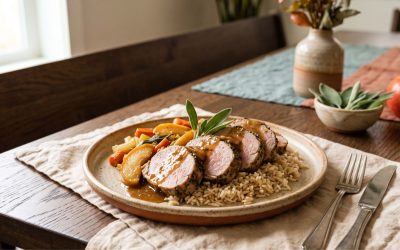
One-Pan Apple & Sage Pork Tenderloin
A one-pan apple and sage pork tenderloin with carrots, celery, and a Dijon-maple pan sauce, served over brown basmati rice — a complete harvest dinner, no side dish required.
Decoding Menopause: What Each Phase Is Actually Doing to You
Decode what’s really happening in each phase of menopause — and uncover the nutrition that actually supports your body through every stage, not just symptoms.