
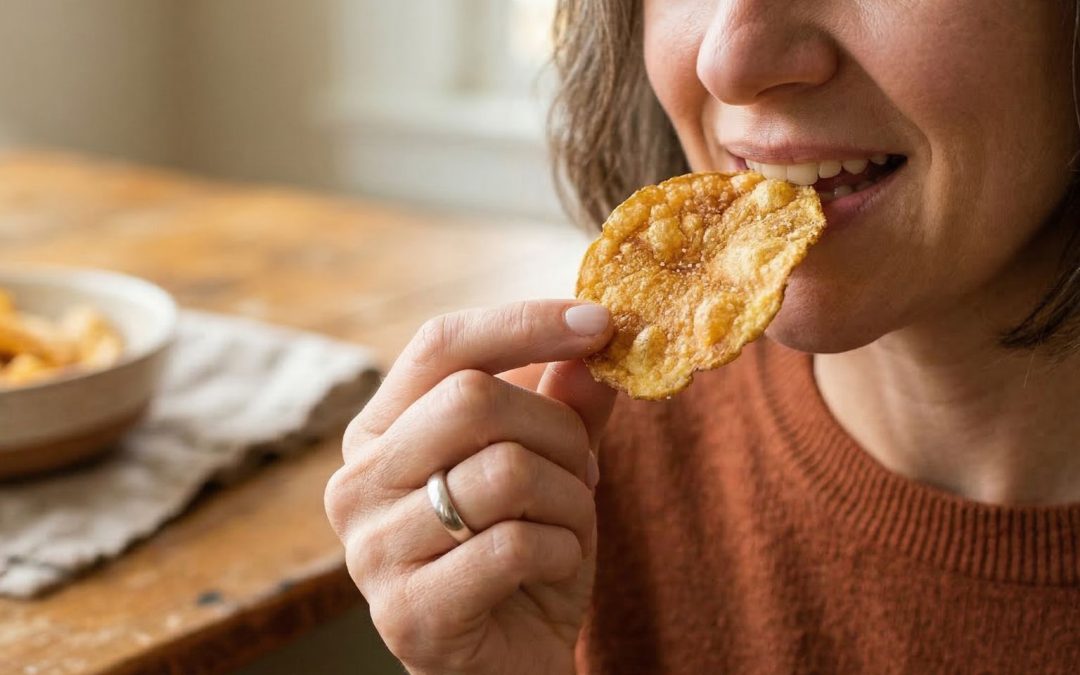
The Crunch Clue: Why We Crave Crunchy Foods
Why crunchy foods are so satisfying — and how our brains learned to crave them.
Sometimes the clue begins with a sound.
The crack of a potato chip.
The snap of a pretzel.
The crunch of a peanut.
That first bite delivers something oddly satisfying. Not just flavour — something more physical. Audible. Almost dramatic.
And if you’ve ever noticed how hard it can be to stop after that first crunchy bite, you’re not alone.
In fact, that experience has been studied.
In a well-known experiment, researchers asked participants to eat potato chips while wearing headphones connected to a microphone near their mouths. The participants were told to judge how fresh and crisp the chips were.
What they didn’t know was that the chips were identical.
The researchers were secretly adjusting the volume of the crunching sound through the headphones.
When the sound was louder, people believed the chips were fresher and crisper.
When the sound was quieter, they thought the chips were stale.
Nothing about the chips had changed.
Only the sound.
It turns out that crunch is not just texture. It’s part of how our brains experience flavour.
Which raises an interesting question.
Why does that crunchy sensation feel so satisfying in the first place?
Clue #1: The Brain’s Reward Signal
Many people have heard that word before — usually in conversations about pleasure, motivation, or reward.
Dopamine is one of the brain’s chemical messengers that reinforces behaviours. When something feels rewarding, dopamine helps the brain remember the experience and encourages us to repeat it.
In simple terms, the brain is saying:
That felt good. Let’s do that again.
Crunchy foods are especially good at triggering this reward signal because they stimulate several senses at once.
You hear the crunch.
You feel the texture.
You taste the salt or sweetness.
Multiple senses firing together create a stronger experience.
Clue #2: The First Bite Rule
Arnold Schwarzenegger once made a simple observation about food that many people overlook.
“The first bite tastes the best.”
If you pause and think about it, there’s a lot of truth in that.
The first bite delivers the full experience.
The flavour is new.
The texture is exciting.
The crunch is loud and satisfying.
After that, something interesting happens.
The brain quickly begins adapting. The excitement fades slightly, even though the food itself hasn’t changed.
Yet many of us keep eating, chasing that same first moment of satisfaction.
Often, the craving wasn’t really for the entire bag of chips.
It was for that first crunchy bite.
Clue #3: Anticipation
Another surprising piece of the puzzle is that dopamine doesn’t only appear when we eat.
It can also appear before the first bite.
The smell of popcorn.
The sound of a chip bag opening.
The sight of melted cheese in a commercial.
These cues signal to the brain that something rewarding might be coming.
Suddenly, we want the food — even if we weren’t hungry a moment earlier.
This is sometimes called anticipation dopamine.
The brain begins preparing for the reward before the experience actually happens.
Clue #4: The Marketing Effect
Walk through a large store like Costco on a busy afternoon and you’ll notice small sample stations appearing around the store.
A bite of sausage.
A cube of cheese.
A spoonful of dip.
Before you even reach the table, your senses are already involved.
You see the food cooking.
You smell it.
You watch someone else taste it.
By the time the sample reaches your mouth, your brain has already begun anticipating the reward.
Food advertising works in a similar way.
For decades, sugary cereal commercials were placed during Saturday morning cartoons. Snack food ads often appear around dinner time or during sports events.
The goal isn’t simply to show you food.
It’s to trigger anticipation.
By the time the first bite arrives, the brain may already have decided it wants it.
Clue #5: The Crunch Trap
Crunch turns out to be a powerful part of the equation.
Many ultra-processed snacks combine several elements that stimulate the brain’s reward system:
salt
fat
refined carbohydrates
and crunch
Together, these create a sensory experience that encourages us to keep eating.
It’s not a personal failure.
It’s a carefully engineered combination.
Clue #6: Why Our Brains Love Crunch
Here’s the interesting part.
Our brains didn’t evolve to crave potato chips.
For most of human history, crunchy foods were actually a sign of freshness and nutrition.
A crisp apple.
A fresh carrot.
Newly harvested vegetables.
Nuts and seeds.
Crunch suggested the food was fresh and full of nutrients.
Soft, soggy, or limp foods were often older or spoiled.
So our brains developed a shortcut:
Crunch = good food.
That signal served us well for thousands of years.
Modern food manufacturing simply learned how to imitate it.
The Health Detective Reframe
Our brains genuinely enjoy it.
The clue is learning to choose real crunch more often.
Some simple examples include:
Apples
Carrots
Celery
Snap peas
Cucumbers
Bell peppers
Radishes
Nuts and seeds can also satisfy the craving for crunch.
Pistachios
Almonds
Pumpkin seeds
Sunflower seeds
Roasted foods can add another layer of satisfying texture.
Roasted chickpeas
Kale chips
Lightly toasted nuts
Homemade granola
Even simple popcorn can provide that satisfying snap when prepared without excess oils or additives.
Closing the Case
The real mystery isn’t why we enjoy crunchy foods.
Our brains have been wired that way for thousands of years.
Crunch once signaled freshness, nourishment, and safety.
The modern challenge is simply recognizing when that signal is being copied by highly processed foods.
The next time you notice a craving for something crunchy, pause for a moment.
You might discover that the craving was really about the experience.
And sometimes, that experience can be satisfied with just one good bite.

More to Explore

Why Emotional Pain Shows Up as Physical Pain
Uncover why grief, suppressed stress, and things never processed can resurface as physical pain — and what your body is really trying to tell you.

The Forty-Minute Clue: What Your Body Remembers About Sitting Still
Uncover the real reason that tender ache in your shoulder or low back keeps returning — and what the evidence says about screens, stillness, and small movement.

Why Old Injuries Hurt Years Later
Uncover why chronic pain rarely starts with the accident everyone remembers — and what genetics, muscle, and joint structure reveal about who it happens to.