
Microplastics Are Inside You Right Now — Here's What the Science Actually Says
They've turned up in blood, lungs, and even heart tissue. The Health Detective cuts through the noise to reveal what microplastics actually are, why they matter, and what you can do about it today.
Okay, so I have to tell you about this. I was scrolling through research one evening — the kind of rabbit hole you fall into when you should probably be winding down — and I came across a study that made me put my phone down and just sit with it for a minute.
Microplastics. In arterial plaque. In actual human hearts.
Not as a theoretical future risk. As a finding, right now, in people who had no idea it was happening.
And here’s the thing — if you’ve been hearing the word “microplastics” everywhere lately and quietly wondering whether it’s just another health buzzword to add to the pile, I get it. There’s so much noise. But this one? This one is worth actually understanding. Because the research has moved well past “maybe something to watch” into genuinely significant territory, and the more I’ve dug into it, the more I think most people deserve a straight, clear answer to what’s actually going on.
Pull up a chair. Let’s walk through it together.
This isn’t about scaring you — it’s about giving you the real picture so you can actually do something useful with it.
Wait — What Actually Are Microplastics?
Technically, a microplastic is any plastic particle under 5 millimetres in size. Some are big enough to see with a magnifying glass. Others — and this is where it gets interesting — are smaller than a red blood cell. The really tiny ones are called nanoplastics, and they’re under 1 micrometre. That’s small enough to slip through the gut lining, cross the blood-brain barrier, and slide into individual cells.
They come from two places. Some are made small on purpose — the microbeads that used to be in exfoliating face scrubs, the synthetic fibres that shed off your fleece in the wash, the tiny plastic pellets used in manufacturing. Those are called primary microplastics. The others — secondary microplastics — start out as bigger plastic things: water bottles, food packaging, car tyres, synthetic clothing. Over time, with heat and UV and physical wear, they break down into smaller and smaller pieces.
And the frustrating truth is that plastic is now so deeply woven into modern life that it’s genuinely hard to avoid. It’s in the air in your home, your drinking water, your food, the dust on your shelves. You can’t willpower your way out of all of it. Which is exactly why understanding what your body does with it — and where it might need a little extra support — is so much more useful than just feeling anxious about it.
How Is It Getting Into Us?
More ways than you’d probably guess, and honestly some of them surprised me too.
Through what you eat and drink
Bottled water is one of the biggest culprits — one litre can contain tens of thousands of plastic particles. Tap water has it too, just generally less. Seafood is another significant one, especially shellfish, because they filter-feed directly from increasingly plastic-saturated water. But here’s the one that really got me: heating food in plastic containers, drinking hot coffee from a plastic-lined cup, or even chopping vegetables on a plastic board all transfer particles directly into your food. The heat accelerates it significantly.
Through the air — yes, really
Indoor air often has a higher concentration of microplastics than outdoor air, which most people don’t expect. Your synthetic carpets, upholstered furniture, and clothing all shed fibres constantly. Research has confirmed we’re inhaling thousands of particles a day, and many of them lodge in lung tissue where, as you can imagine, they have no business being.
Through personal care products
Canada banned microbeads in rinse-off cosmetics back in 2018, which was a good move. But plastic polymers still sneak into some sunscreens and personal care products under ingredient names most of us don’t recognise. Skin absorption is the smallest of the pathways, but it’s there.
There’s a widely cited estimate that the average person takes in roughly a credit card’s worth of plastic every week. The exact number is debated — but the direction it points is not.
Okay But What Is the Body Actually Dealing With?
It messes with your hormones
A lot of plastics contain — or leach — chemicals that genuinely interfere with how the body’s hormonal system communicates with itself. The two most studied are bisphenol A (BPA) and phthalates. Both are classified as endocrine disruptors, which means they mimic or block oestrogen and other hormones. The downstream effects touch everything: thyroid function, metabolism, sleep quality, mood, reproductive health. If you’re in a season of life where hormonal balance is already shifting, the last thing you want is additional interference coming in from your water bottle.
It creates ongoing, low-grade inflammation
When the body encounters something foreign that it can’t break down or get rid of, it does what immune systems do — it mounts a response. With microplastics, because the exposure is constant and low-grade, so is that inflammatory response. And chronic low-grade inflammation is something we now understand to be quietly driving a whole range of conditions, from cardiovascular disease to cognitive decline. That 2024 study in the New England Journal of Medicine I mentioned? People with microplastics in their arterial plaque had a significantly higher risk of heart attack, stroke, and death over the following 34 months. That finding shifted the conversation considerably.
It disrupts your gut — which disrupts everything else
The gut is where a lot of microplastic accumulation happens, and it turns out they can alter the composition of your gut microbiome — reducing bacterial diversity and damaging the intestinal lining. A compromised gut lining becomes more permeable, meaning particles and toxins that should have been eliminated end up back in circulation instead. If you’ve ever felt like your digestion is “off” in ways that are hard to put your finger on, this is one more thing worth knowing about.
They don’t arrive alone
This part is genuinely unsettling: plastic particles are what chemists call hydrophobic, meaning they attract and bind to other fat-soluble toxins — heavy metals, pesticides, persistent organic pollutants. So they don’t just show up on their own. They show up carrying a payload, and once they’re in tissue, they can continue leaching those chemicals over time. It’s a bit like finding out your uninvited houseguest also brought all their friends.
So, What Can You Actually Do About It?
Here’s where I want to slow down, because this is the part that matters most and it’s also where a lot of health content either goes too far or not far enough. Neither is helpful.
The truth is: you can’t eliminate microplastic exposure entirely in the world as it currently exists. But you can meaningfully reduce it, and you can absolutely support the systems your body already has in place to handle what gets in. Both of those things are worth doing, and neither requires you to turn your life upside down.
The highest-impact changes for reducing exposure
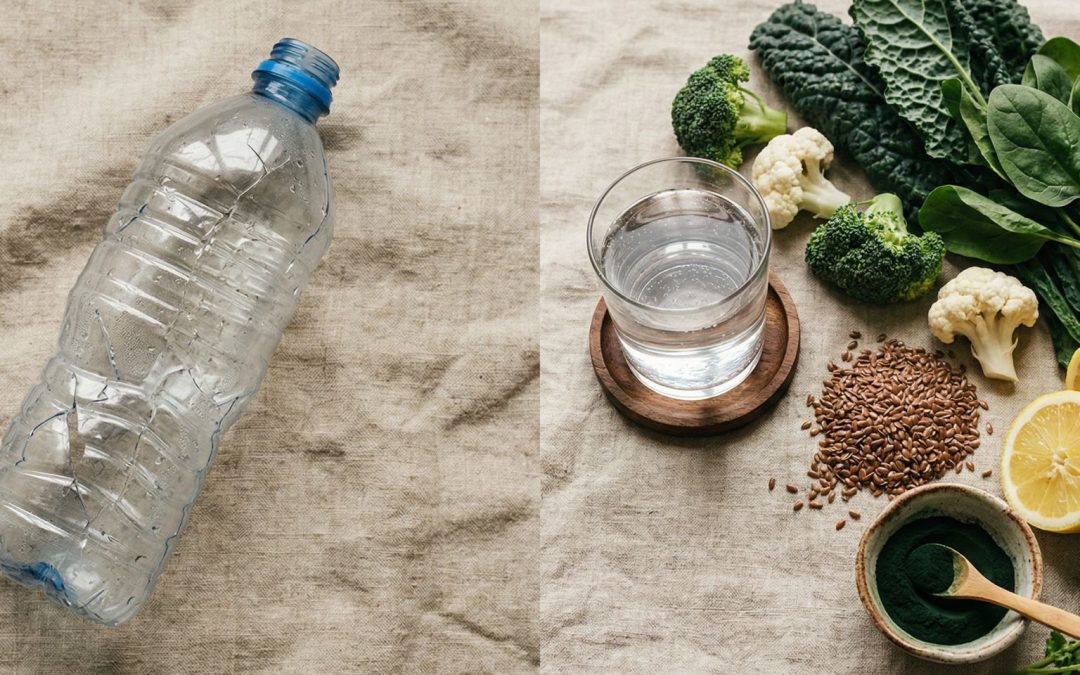
Get a water filter and actually use it. A reverse osmosis filter or a certified solid carbon-block filter removes the vast majority of microplastics from drinking water. This is probably the single most impactful change most people can make. If you do nothing else from this article, do this one.
Stop heating food in plastic. Glass, ceramic, stainless steel — these are your friends, especially for hot food and liquids. The heat dramatically accelerates leaching, and swapping out your containers is genuinely one of the easier changes to make stick.
Rethink your washing routine. A microfibre washing bag (the Guppyfriend is the most researched one) captures synthetic fibres before they go down the drain and eventually back into your water supply. Natural fibre clothing — wool, linen, cotton — also sheds far less than polyester or nylon.
Cut back on canned and packaged food where you can. Most tin cans are lined with plastic-based coatings. Fresh and frozen tend to be lower-exposure choices.
Ventilate your home and vacuum regularly. This sounds almost too simple, but household dust is genuinely one of the main ways we inhale microplastics indoors. Open the windows. Run the vacuum. It actually helps.
Supporting your body’s own detoxification
Your liver is your primary detoxification organ, and it works in two phases: Phase I breaks substances down, and Phase II binds them to carrier molecules so they can be eliminated. Both phases need nutritional support to work well — and when your toxic load is higher, that support matters more. Here’s what the research points to most clearly.
Sulforaphane — your liver’s best friend from the vegetable aisle Broccoli, Brussels sprouts, kale, and cauliflower all contain compounds called glucosinolates that convert to sulforaphane — one of the most studied Phase II detox activators out there. It switches on a protein called Nrf2, which tells your body to ramp up its own antioxidant and detoxification enzyme production. The catch: lightly steaming preserves far more of the active compound than boiling does. And broccoli sprouts are wildly concentrated — a small handful gives you the sulforaphane equivalent of a much larger portion of regular broccoli.
Fibre — the underrated toxin escort Soluble fibre physically binds to toxins in the gut and carries them out before they can be reabsorbed into circulation. Psyllium husk, ground flaxseed, oat bran, and legumes are your best sources. Aim for 30 or more grams daily across a variety of foods — diversity matters here just as much as quantity.
Chlorella — specifically broken-cell wall This freshwater algae has been researched for its ability to bind to heavy metals, which frequently travel with microplastics. The broken-cell wall form is essential — the cell wall has to be physically cracked for the binding compounds to be bioavailable. Start with a low dose, around 1–2 grams, and build up gradually.
NAC (N-Acetyl Cysteine) — the glutathione builder NAC is a precursor to glutathione, your body’s master antioxidant and a critical player in Phase II liver detoxification. Think of it as giving your body the raw materials it needs to make more of its own defence system. Research doses typically run from 600 to 1,800 mg daily — your practitioner can help you find the right point for your situation.
Magnesium — glycinate or malate, please Magnesium is involved in over 300 enzymatic reactions, a meaningful number of which sit directly in detoxification and antioxidant pathways. The form matters: glycinate and malate are well absorbed. Magnesium oxide — the cheap one in most generic supplements — is significantly less bioavailable and mostly ends up as a laxative rather than actually getting into your cells. Worth checking what’s in yours.
B vitamins — B2, B6, B9, and B12 specifically The methylation cycle — which sits upstream of both Phase II detox and neurotransmitter regulation — runs on these particular B vitamins. The forms matter: B12 as methylcobalamin (not cyanocobalamin) and folate as methylfolate (not folic acid) are the biologically active versions. This is especially relevant if you carry MTHFR gene variants, which some estimates put at nearly 40% of the general population.
Vitamin C — buffered or liposomal Vitamin C is a direct antioxidant that also helps regenerate glutathione — so it’s doing double duty. Liposomal forms deliver better intracellular absorption than standard ascorbic acid. If you’ve ever found high-dose vitamin C hard on your stomach, a buffered form like calcium ascorbate is generally much gentler and equally effective.
🔍 Detective’s Note
Vitamin C and zinc are a great team for immune defence and antioxidant support — but not at the same time. High doses of zinc can interfere with how vitamin C is absorbed and used at the cellular level, and this applies to food too. Spinach, legumes, and wholegrains contain compounds that can reduce zinc absorption when eaten together. Space your zinc supplement at least two hours from high-dose vitamin C, and enjoy your leafy greens at a different meal from your zinc-rich foods like meat, shellfish, pumpkin seeds, or eggs. Morning and evening works perfectly for the supplements.
Zinc — picolinate or bisglycinate Zinc is essential for superoxide dismutase, one of your body’s primary antioxidant enzymes, and plays a direct role in immune regulation. The endocrine disruptors in plastics can deplete zinc levels over time, which makes adequate intake particularly relevant here. Picolinate and bisglycinate forms are considerably better absorbed than zinc oxide or zinc sulphate.
When It’s Worth Talking to Someone
Persistent fatigue that genuinely doesn’t respond to sleep or rest Hormonal changes that feel sudden or hard to explain Digestive symptoms that hang around despite changes to your diet
Unexplained skin flares, inflammation, or autoimmune symptoms Brain fog, word-finding difficulties, or concentration issues that feel new Elevated inflammatory markers on bloodwork without a clear cause
If you’re working with a functional or integrative medicine practitioner, it’s also worth asking about environmental toxin panels — specialty labs now offer microplastic and toxin testing that wasn’t available even a few years ago.
Closing the Case
But it also doesn’t mean moving off-grid or spending a fortune or living in a state of constant anxiety about your water bottle. It means a water filter, some small swaps in your kitchen, a bit more broccoli, and supporting the detoxification systems your body already knows how to run.
The body is genuinely remarkable at handling challenge when it has what it needs. It’s been doing it for a very long time. Your job — and it’s actually a pretty manageable one — is to give it the raw materials and the conditions to do that well.
You came here wanting to understand what all the fuss was about. Now you do. And knowing this stuff? That’s where good decisions start.

More to Explore

Why Disconnection Can Make Pain Hurt More
Uncover why loneliness, disconnection, and a lack of meaning can intensify chronic pain — and what genuine connection actually does for your nervous system.

Doubling Up on Painkillers: The Risk Hiding in Plain Sight
You took an Advil this morning. Can you use the gel tonight? Uncover what the cream is really doing — and which combinations actually count.

Why Thinking About Pain Can Make It Hurt More
Uncover why the way you think about pain can turn up its intensity — and why that’s a sign of a protective nervous system, not weakness or exaggeration.