
Micro-Coping & Aromatherapy: What Your Nose Knows About Stress
The science behind scent-based stress relief — and what to know before you inhale.
That’s exactly where micro-coping comes in. And if you’ve recently spotted compact little nasal inhalers showing up in wellness shops — or caught a friend reaching for one mid-commute — there’s a genuinely interesting science story behind them worth investigating.
This isn’t about trendy wellness theatre. It’s about understanding what’s really happening when you pause, breathe intentionally, and ask your nervous system to shift gears — and whether something as simple as what you’re smelling while you do it actually changes the outcome.
Let’s open the case.
What Is Micro-Coping — And Why Does It Actually Work?
Micro-coping is the practice of using small, intentional actions to regulate stress in real time, before it snowballs into full-blown overwhelm. Think of it as catching the wave before it crashes rather than swimming out of the wreckage afterward.
The reason it works comes down to biology. Your stress response — driven largely by cortisol and adrenaline — is designed to ramp up fast, but it doesn’t have to stay ramped up. You can send counter-signals to your nervous system deliberately and frequently throughout the day. Not through heroic effort, but through small, well-timed interruptions.
Examples include:
- The 5-4-3-2-1 sensory grounding technique: naming five things you see, four you feel, three you hear, two you smell, one you taste — pulling attention away from the anxious mind and back into the physical moment
- Verbal reframing: saying to yourself, “this feeling is temporary” or “I just need the next right step” — not to deny what’s real, but to reduce the intensity enough to think clearly
- Micro-movements: shaking out your arms and legs, unclenching your jaw, rolling your shoulders — because stress lands in the body, not just the mind
- Cold water on the face — a fast, low-effort way to trigger the dive reflex and bring your nervous system down a notch
Each of these works because it interrupts a pattern. Stress is, in part, a feedback loop — the more overwhelmed you feel, the more overwhelmed your body signals that you are. Break the loop often enough and you shift the default.
The Nose Knows: What Aromatherapy Is Actually Doing to Your Brain
Here’s where it gets genuinely fascinating from a detective standpoint. When you inhale an essential oil through your nose, you aren’t just having a pleasant sensory experience. You are sending a direct signal deep into your brain — via the olfactory bulb — straight to the limbic system.
The limbic system is one of the oldest structures in the human brain. It governs memory, emotional processing, and — critically — how your nervous system responds to perceived threat. This is why certain smells can stop you in your tracks and take you immediately to a memory, or why a familiar scent can shift your mood within seconds with no cognitive effort at all.
This is also why nasal inhalation is specifically meaningful. Unlike topical application, inhaled essential oils reach this part of the brain faster — and the effects are measurable. Research on lavender (Lavandula angustifolia), for example, has consistently shown a reduction in cortisol markers and self-reported anxiety, with effects appearing within minutes of inhalation. Clary sage has demonstrated estrogen-like activity that may help regulate mood, particularly relevant during hormonal transitions. Vetiver, with its deep, earthy profile, has been studied for its calming effect on the central nervous system and potential benefits for focus and anxiety reduction.
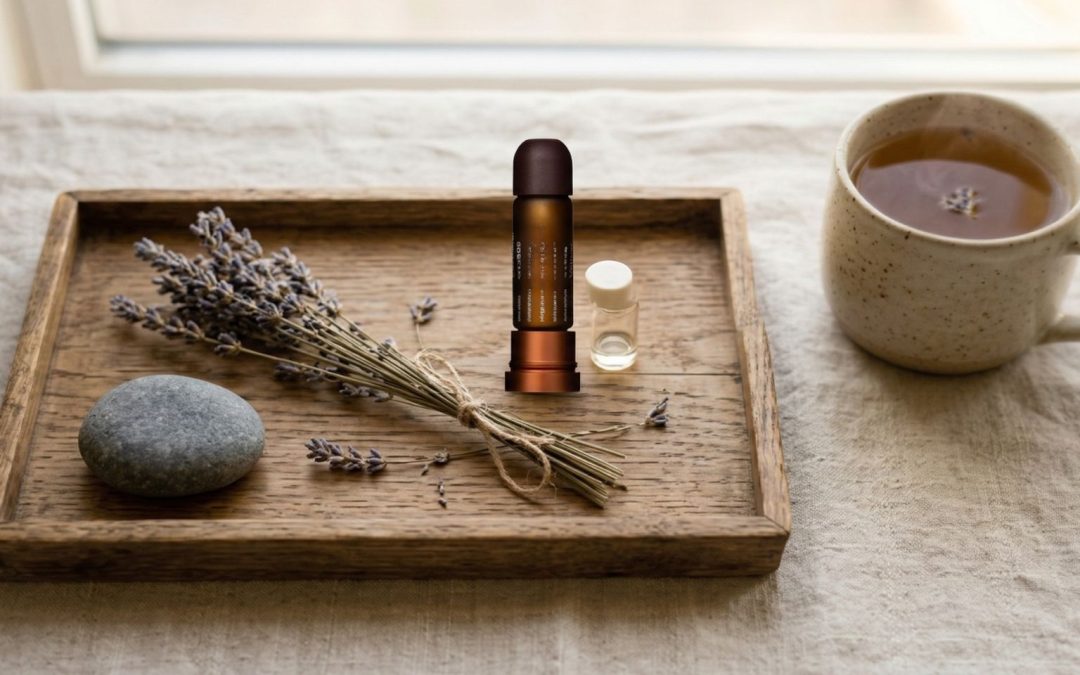
When Saje formulated their Quick Hit: Stress Release nasal inhaler, these weren’t decorative choices. The blend is licensed with Health Canada to help relieve symptoms of tension and stress — a regulatory standard most aromatherapy products never reach, and one that puts this inhaler in a different category than a pleasant-smelling novelty.
All six essential oils in the formula carry medicinal ingredient status. Listed by concentration, here’s what’s actually at work:
- Lavender (Lavandula angustifolia) — the dominant ingredient, and for good reason. Well-studied for its ability to reduce cortisol and settle an overactivated nervous system, it anchors the entire blend.
- Orange (Citrus sinensis) — bright and uplifting, it counters the heaviness that comes with sustained stress and gently shifts mood without overstimulating.
- Roman Chamomile (Chamaemelum nobile) — quietly sedative and deeply soothing, particularly useful when stress has settled into the body as physical tension or irritability.
- Geranium (Pelargonium graveolens) — balancing and nurturing, with particular relevance for mood fluctuations tied to hormonal shifts.
- Clary Sage (Salvia sclarea) — grounding and clarifying, with mild estrogen-like properties that may support emotional steadiness during hormonal transitions.
- Myrtle (Myrtus communis) — clarifying and respiratory-supportive, helping open the breath for deeper, more effective inhalation.
- Vetiver (Chrysopogon zizanioides) — the smallest dose in the formula, and perhaps the most quietly powerful. Deeply centering and earthy, it’s the ingredient that pulls everything else into stillness.
Sometimes the quietest ingredient in the room does the most grounding work.
“What started as a single kiosk at Vancouver’s Lonsdale Quay in 1992 has grown into a full natural wellness brand available across North America.”
— Saje
Still headquartered in Vancouver, this is a homegrown British Columbia success story — and proof that sometimes the best medicine really does come from your own backyard.
Who Benefits Most — And Who Should Pause First
This is where the Health Detective digs a little deeper, because “natural” and “safe for everyone” are not the same sentence.
Those likely to benefit most:
People navigating high-stress periods — demanding careers, caregiving responsibilities, life transitions like divorce, grief, or early retirement — often find that micro-coping tools close a practical gap. They don’t require scheduling an appointment, taking time off, or explaining yourself to anyone. You use them at your desk, in a bathroom stall, on public transit. That kind of low-barrier support genuinely matters.
Those dealing with stress-related sleep disruption may also find meaningful support through aromatherapy. Saje’s sleep line specifically addresses this — products like their Sleep Well Roller Blend use vetiver, chamomile, and cedarwood to help the body shift toward a more restful state at the end of the day. If you know someone who’s tired but wired every night, this is a conversation worth having.
For those who love a mood lift, Liquid Sunshine — available as a roll-on and a lip balm — deserves its cult status. With a blend of bergamot, grapefruit, and lemon, it’s the kind of scent that genuinely replicates the feeling of sun on your face. Especially useful when the sky has other plans. (Looking at you, Vancouver June.)
Those who should be cautious or consult first:
- Respiratory conditions — If you have asthma, COPD, or reactive airways, inhaled essential oils can trigger bronchospasm in some individuals, particularly with high-stimulant oils like eucalyptus, peppermint, or rosemary. Start with very brief exposure and monitor response carefully. Talk to your respiratory specialist first.
- Nasal passage issues — Chronic sinusitis, deviated septum, nasal polyps, or frequent congestion can alter how effectively — and comfortably — inhalation works. If your nasal passages are compromised, you may also be getting less of the intended effect, reducing the benefit while still potentially triggering irritation.
- Allergies and sensitivities — Essential oils are highly concentrated plant compounds. If you have known sensitivities to specific plants or flowers (ragweed, chamomile, or members of the Asteraceae family, for example), cross-reactivity with certain essential oils is possible. Lavender is generally well-tolerated, but clary sage and vetiver can cause reactions in sensitive individuals. Patch testing logic applies here too — start low and slow.
- Hormone-sensitive conditions — Clary sage contains sclareol, a compound with oestrogen-like activity. For most people, this is subtle and supportive. For those with hormone-sensitive cancers, active endometriosis, or complex hormonal conditions, it’s worth discussing with your healthcare provider before regular use.
- Pregnancy — Many essential oils are contraindicated during pregnancy, particularly clary sage, which has historically been used to stimulate uterine contractions. If you are pregnant or think you might be, get direct guidance from your midwife or OB before using any aromatherapy inhalers.
- Children and highly sensitive individuals — Nasal inhalers are designed for adults. The concentration of oils in an inhaler format is significantly higher than in a diffuser environment, and what feels pleasant and therapeutic to an adult can be overwhelming or irritating for a child or someone with heightened chemical sensitivity.
The Breathwork Piece You Shouldn’t Skip
The nasal inhaler simply layers the benefit of scent-based limbic activation on top of a breathing practice you’re already performing. That’s not small — it’s actually compounding two of the most evidence-supported non-pharmacological interventions for acute stress. The reason these products work so well for so many people is that the mechanism is sound, even if the packaging is modest.
Red Flags Worth Flagging
Aromatherapy is genuinely supportive, but it is not a substitute for medical care when symptoms are significant. Reach out to a healthcare provider if:
- Stress symptoms are persistent and affecting sleep, appetite, or your ability to function at work or in relationships
- You notice anxiety that feels out of proportion to your circumstances, particularly if accompanied by heart palpitations, chest tightness, or breathlessness
- You develop any nasal irritation, sneezing, watery eyes, or wheezing after inhaler use — this is your body signalling that the product isn’t the right fit for your chemistry
- You find you’re relying on any single stress management tool as your only coping mechanism — that’s useful information about what additional support might actually be needed
Closing the Case
What micro-coping tools like aromatherapy nasal inhalers reveal is something the Health Detective finds consistently true: the body is already equipped with profound stress-regulation pathways. The question is whether you’re sending it enough helpful signals throughout the day, or waiting until the overwhelm is too large to address with a single deep breath.
For most people, a quality nasal inhaler — used with intention and a few slow, deliberate breaths — is a safe, scientifically grounded, genuinely useful addition to a stress management approach. For those with respiratory sensitivities, allergies, or specific hormonal or health concerns, a brief conversation with a healthcare provider is the smarter starting point.
Saje has built 30 years of formulation experience into products that take the science seriously. From their Stress Release Kit to their Restful Sleep Kit and the ever-reliable Liquid Sunshine — perfect for grey-sky days when your serotonin needs a nudge — their range is worth investigating as part of a thoughtful wellness toolkit.
Your nervous system is sending signals all day. Learning to answer them well? That’s the real case worth cracking.

More to Explore

What the Collagen Ads Don’t Tell You: Decoding the Real Science
Decode the real science of collagen — what it does, when to start, food sources, and why 3–6 months is the honest timeline most ads skip right over.
No-Bake Sunflower Seed Protein Energy Bites
No-bake protein energy bites made with sunflower seed protein, almond butter & oats. Ready in 15 mins, meal-prep ready, no oven needed.

Baked Blueberry Almond Protein Oats
High-protein, blood sugar-friendly breakfast bake with blueberries, almond & cinnamon. One bowl, 10 mins prep, meal-prep ready.