
Opening the Case
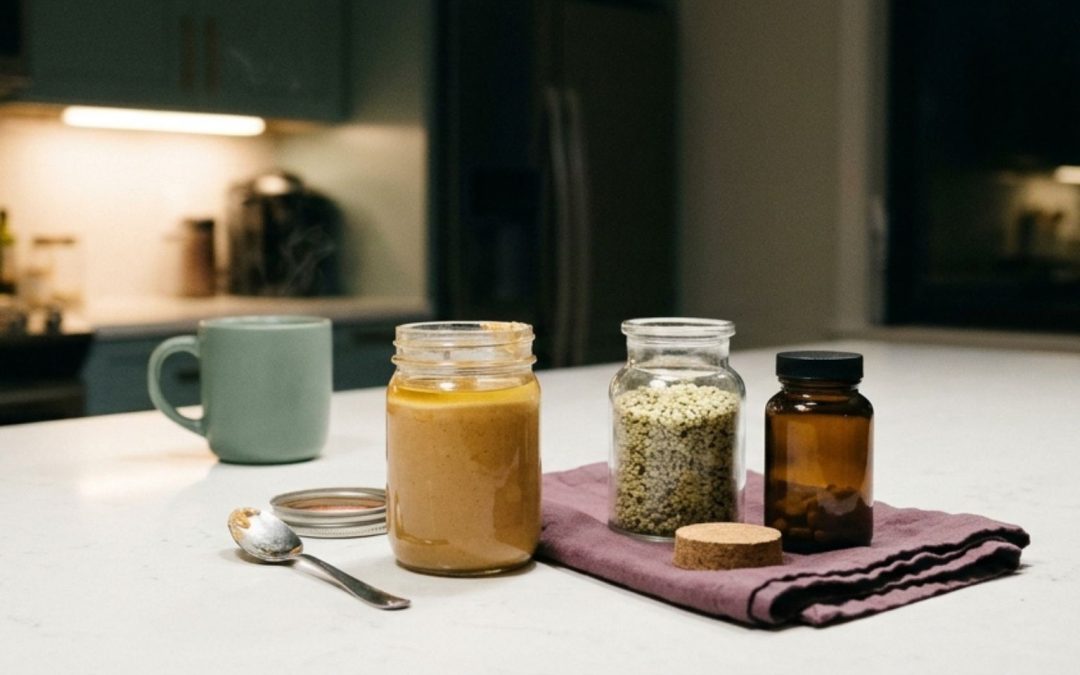
It’s 3 a.m. The house is quiet, and your brain decides this is the perfect moment to ask: wait, was I supposed to put the peanut butter in the fridge?
Then it keeps going. Is the ground flax in the cupboard going bad? Is that vitamin D you’ve been taking every winter piling up somewhere? Why does your friend swear by one kind of magnesium for sleep when the one in your cabinet just sends you to the bathroom?
These aren’t silly questions. They’re the small, practical puzzles of looking after your own health (and often everyone else’s) while running a full life. And because the answers online tend to contradict each other, they sit there, unsolved, right when you need sleep most.
This isn’t about judgment. It’s about understanding what’s really happening inside the jar, the bottle and your body. So let’s close ten of those cases, one short answer at a time.
Clue #1: Should You Refrigerate Peanut Butter (and Maple Syrup)?
It depends on what’s in the jar. Conventional peanut butter usually contains hydrogenated oils or palm oil. Those fats are more saturated, so they hold the spread together and resist going off. A pantry shelf is fine.
Natural peanut butter, the kind that’s just peanuts and maybe salt, is a different story. With nothing to bind it, the peanut oil rises to the top, and that exposed layer meets oxygen. Food scientists studying peanut butter confirm that oil separation speeds up oxidative rancidity and shortens shelf life. The fix: stir it well once, then keep it in the fridge. The cold slows both the separation and the oxidation. If it ever smells like old paint or tastes bitter, the fats have turned. Toss it.
While you’re standing at the fridge door: pure maple syrup belongs in there too once it’s opened. Its sugar content isn’t high enough to stop mould on its own. Ontario’s agriculture ministry notes that refrigerating or freezing slows or prevents mould growth and asks producers to say so on the label. Unopened bottles are fine in the cupboard.
Clue 2: Chia, Ground Flax and Hemp Hearts: Fridge or Pantry?
All three are rich in polyunsaturated fats, including omega-3 ALA. Those are the delicate fats that go rancid when heat, light and oxygen get at them. But each seed protects itself differently.
Whole chia seeds are the toughest of the three. They carry their own antioxidants, such as caffeic acid and quercetin, and an intact seed coat. A cool, dark pantry works. Once ground, chia loses that shell, so move it to the fridge.
Ground flax has a scarier reputation than the research supports. A Canadian study found milled flaxseed stayed stable for about four months at room temperature, likely thanks to the seed’s own built-in antioxidants. That said, it was stored in plastic-lined paper bags at a steady 23°C, not a steamy kitchen next to the stove. If you buy in bulk or don’t know how long it’s been sitting, the fridge or freezer is still the smart call. And keep grinding it: whole flaxseed tends to pass straight through you undigested.
Hemp hearts go in the fridge after opening, no debate. They’re hulled, which means the protective shell is gone, and hemp seed oil is especially high in polyunsaturates. Storage tests show it oxidizes readily. A fishy or paint-like smell, or clumping, means they’ve turned.
📌 BTW: WHAT EACH SEED ACTUALLY BRINGS
They often get lumped together, but each one has its own strength. Approximate amounts:
- Chia (2 tbsp): the fibre champion. About 8 g fibre, 4 g protein, 4 g omega-3 ALA, plus about 150 mg calcium. Its soluble fibre forms a gel in liquid, which helps you feel full and keeps things moving.
- Ground flax (2 tbsp): the lignan seed. About 4 g fibre, 3 g protein and 3 g omega-3 ALA. Flax is the richest food source of lignans, plant compounds with weak estrogen-like activity. They’ve been studied for heart health and menopause symptoms, with mixed results so far.
- Hemp hearts (3 tbsp): the protein seed. About 10 g protein, 2.5 g omega-3 ALA, around 210 mg magnesium, 3 mg zinc and 2.4 mg iron. Very little fibre, since the hull is gone.
One thing to know about the omega-3: all three give you ALA, the plant form. Your body converts only a small share of ALA into EPA and DHA, the forms found in fish. Seeds are a great addition, but they don’t replace fatty fish or an algae-based omega-3.
Clue 3: Is Plant Protein Enough After 45 or 50?
It can be. But it takes more planning than most people realize, and here’s why.
As we age, muscle becomes less responsive to the protein we eat. Researchers call this anabolic resistance: the same meal sends a weaker “build and repair” signal than it did at 30. The main trigger for that signal is leucine, an essential amino acid that switches on muscle protein synthesis (the process of building new muscle tissue). A review of meal-distribution research found that older adults need meals with at least 2.8 grams of leucine, roughly 30 grams of protein, to get a meaningful response. Younger adults get by with less.
Now the plant piece. A Maastricht team analysed protein isolates and found that plant proteins generally carry fewer essential amino acids than animal proteins. Oat, lupin and wheat came in around 21–22% essential amino acids, compared with 43% for whey and 32% for egg. Many plant proteins also run low in leucine, lysine or methionine.
And midlife matters here. A large study that tracked women through the menopause transition found that lean mass starts to decline at the start of the transition and keeps falling until about two years after the final period. That’s right when anabolic resistance is building.
Canada’s Food Guide suggests choosing plant protein more often, mainly for the fibre and lower saturated fat, and that’s sound advice for heart health. It just doesn’t mean plants alone, in small portions, will protect your muscle. If you eat mostly plants, aim for larger servings and mix sources: a cup of cooked lentils (about 18 g protein) with 3 tablespoons of hemp hearts (about 10 g) gets you close to that 30 g mark. Tofu, tempeh, edamame and soy beverages are your strongest plant players.
🗂️ FROM THE CASE FILES
In 2023, researchers fed 16 adults aged 65 to 85 two dinners with the same calories and the same protein, about 36 grams each. One centred on lean beef. The other was a whole-food vegan meal of quinoa, soybeans, chickpeas and broad beans. Muscle protein synthesis was about 47% higher after the beef meal.
But here’s the twist that keeps this from being a “meat wins” story. When older adults ate a high-protein vegan diet built around mycoprotein at 1.8 g of protein per kilogram of body weight, their daily muscle-building rates matched an omnivorous diet. The lesson: plant-based eating can protect muscle after 50. It simply needs more protein, better-chosen protein, or both.
🍽️ SMART PAIRINGS
Plant proteins like lentils, beans and tofu bring non-heme iron with them. Pair them with vitamin C (red pepper, tomatoes, citrus, strawberries) to help your body absorb that iron. Save your tea or coffee for at least an hour away from the meal, since their polyphenols block non-heme iron.
Clue 4: Can Your Body Only Use 30 Grams of Protein at Once?
This one has been repeated so often it feels like fact. The research says otherwise.
A 2023 study gave healthy young men either 25 or 100 grams of milk protein after a full-body workout. The bigger dose produced a greater anabolic response that was still going more than 12 hours later, and the researchers found protein intake had only a negligible effect on how much was burned for fuel. The body digests a large protein meal more slowly and keeps using it longer.
Two honest caveats. These were young men after exercise, not midlife women at a desk. And for older muscle, the leucine threshold from Clue 3 still matters at every meal. So the practical takeaway isn’t “eat it all at dinner.” It’s this: a bigger protein meal isn’t wasted, but spreading roughly 25–30 grams across breakfast, lunch and dinner gives your muscles three good signals instead of one. Breakfast is where most people fall short.
Clue 5: Does Collagen Count Toward Your Protein?
Not for muscle. Collagen is an incomplete protein. It contains no tryptophan, an essential amino acid, and it’s low in leucine.
When McMaster University researchers gave healthy women in their late sixties 30 grams of either whey or collagen twice a day for six days, whey stimulated muscle protein synthesis while collagen didn’t. That’s a meaningful finding for anyone stirring a scoop of collagen into their coffee and counting it as their morning protein.
Collagen may have a place for skin, joints or connective tissue, and that research is still developing. Just don’t let it stand in for eggs, Greek yogurt, fish, tofu or a complete protein powder when your goal is keeping muscle.
Clue 6: If You Eat Well, Why Take Supplements at All?
Food comes first, always. Whole foods bring nutrients packaged with the fibre, fats and cofactors your body expects. But a few nutrients get genuinely harder to cover with food alone as the years go on, even with a good diet.
Vitamin D is the clearest case for Canadians. Our winter sun is too weak for skin to make much of it, and few foods contain it. That’s why Health Canada recommends that everyone over 50 take a daily 400 IU vitamin D supplement on top of vitamin D-rich foods.
Vitamin B12 is the sneakier one. You need stomach acid to pull B12 out of food, and many older adults make less of it, sometimes because of a condition called atrophic gastritis. The B12 in fortified foods and supplements doesn’t need that acid to be released. That’s why the U.S. National Institutes of Health advises that people over 50 get most of their B12 from fortified foods or supplements, even if they eat meat. Long-term use of metformin or acid-reducing medications (proton pump inhibitors) can lower B12 too. Methylcobalamin is a well-absorbed supplement form.
Red flags worth a blood test: tingling or numbness in the hands or feet, unusual fatigue, memory fog, or a sore, smooth tongue can all point to low B12. Ask your doctor for a serum B12 test (and methylmalonic acid if results are borderline). This is especially worth raising if you, or someone you care about, take metformin or a daily acid reducer.
Here’s a five-minute investigation worth doing this week. Line up every bottle you take on the kitchen counter: multivitamin, vitamin D drops, calcium, magnesium, that “immune” blend, even antacids. Then read the labels for repeats. I see it often: vitamin D in three products, magnesium in two, nobody adding it up. Take a photo of every label, front and back. Then show it to your nutritional therapist, pharmacist or doctor, ideally all three. Your pharmacist can check for clashes with any medications you take, and you don’t need an appointment. It’s the fastest way to find out what’s helping, what’s doubling up, and what you can stop paying for.
Clue 7: Can You Overdo Vitamin D?
Yes, though it’s rare, and it almost never happens at everyday doses.
Health Canada’s tolerable upper intake level for adults is 4,000 IU a day from all sources combined. BC’s clinical guidelines note that true toxicity usually takes more than 10,000 IU a day over time. Because vitamin D is fat-soluble, your body stores the extra rather than flushing it out, which is why excess can build slowly.
When it does happen, the problem is calcium. Too much vitamin D drives calcium absorption up, and a review of case reports found vitamin D toxicity shows up mainly as high blood calcium, with vomiting, dehydration, pain and loss of appetite. Most cases came from very high self-prescribed doses, manufacturing errors, or “catching up” too aggressively on a deficiency.
The real-world risk is stacking: a high-dose D supplement plus a multivitamin plus a calcium-D combo, sometimes for years. Canada also doubled the vitamin D in milk and margarine as of January 2026. Osteoporosis Canada says food plus a 400 IU supplement is still not expected to exceed safe levels, but it’s another reason to know your total.
Red flags: persistent nausea, unusual thirst, frequent urination, constipation, confusion or muscle weakness while taking vitamin D warrant a call to your doctor, who can check blood calcium and 25-hydroxyvitamin D. And if you’d like to take more than 1,000–2,000 IU a day, get a blood test first so the dose is based on your numbers, not a social media post.
Clue 8: Which Magnesium Does What?
Not all magnesium behaves the same way. What changes is the compound the magnesium is attached to, and that decides how much you absorb and how much stays in your gut.
Magnesium citrate is well absorbed, but the portion left behind in your intestine draws water into the bowel. That’s why it’s the go-to for gentle regularity, and why some people find it too lively.
Magnesium oxide packs the most magnesium per pill on the label but absorbs poorly. One comparison of commercial products found only about 4% was absorbed. Most of it stays in the gut, which makes it a stronger laxative than a way to raise your magnesium status.
Magnesium glycinate (bisglycinate) is magnesium bound to the amino acid glycine. It’s well absorbed and much gentler on digestion, so it’s the usual choice for daily use and the form most people take in the evening.
Now the honest part about sleep and muscles. A systematic review of three trials in older adults with insomnia found people on magnesium fell asleep about 17 minutes faster, but the evidence quality was low. And a Cochrane review concluded that magnesium is unlikely to give older adults meaningful relief from night-time leg cramps. Magnesium may still help if your intake is low, which is common when diets lean on refined foods. It’s just not the sleeping pill or cramp cure the marketing suggests.
Start with food: pumpkin seeds, hemp hearts (yes, those again), almonds, black beans, leafy greens and dark chocolate. If you supplement, the upper limit for supplemental magnesium is 350 mg a day, mainly because diarrhea becomes common above it. Anyone with reduced kidney function should only supplement with medical guidance, since the kidneys are what clear the excess.
Clue 9: Does the Time of Day Matter for Supplements?
For some, a lot. For others, it’s mostly about what you’ll actually remember.
Iron absorbs best on an emptier stomach or with a vitamin C-rich food, and away from coffee, tea and calcium. In one classic study, drinks rich in polyphenols such as black tea and coffee cut non-heme iron absorption from a meal by 50–90%, depending on how strong they were.
Calcium absorbs best in doses of 500 mg or less at a time, so split larger amounts. Calcium carbonate needs stomach acid and should go with food. Calcium citrate doesn’t; in postmenopausal women it was more bioavailable than carbonate even when taken with breakfast, which makes it the better pick for anyone on an acid reducer.
Thyroid medication is where timing really counts. If you take levothyroxine, the prescribing information advises keeping it at least four hours away from calcium, iron and magnesium, which all bind to it and block absorption. A common rhythm: thyroid medication first thing on an empty stomach, minerals later in the day. Check with your pharmacist about your own schedule.
Magnesium glycinate is often taken in the evening, mostly by preference. B vitamins tend to go in the morning, partly because some people find them a little energizing. Neither has strong research behind a “best” hour. Consistency matters more than the clock.
Clue 10: Why Pair Supplements with Certain Foods?
Because absorption is a team sport. Many nutrients need a partner to get across the gut wall, and a few compete for the same doorway.
Vitamin D needs fat. Fat triggers bile, which packages fat-soluble vitamins so they can be absorbed. A Tufts study in adults over 50 found that taking vitamin D3 with a fat-containing meal raised peak blood levels by 32% compared with a fat-free meal. (That study used a single large dose, so the exact percentage may differ for daily doses, but the principle holds.) Take it with breakfast eggs or an avocado toast, not with black coffee on the way out the door.
Iron needs vitamin C. Vitamin C changes plant-based (non-heme) iron into a form your gut absorbs more easily and keeps it soluble along the way.
Collagen needs vitamin C too, but for a different reason: your body uses vitamin C to build collagen in your tissues.
Some minerals compete. High-dose iron and zinc supplements use overlapping transport pathways, so separate them by a couple of hours. From food, this isn’t a concern.
🍽️ SMART PAIRINGS
- Vitamin D3 + a meal with fat (eggs, salmon, nuts, olive oil, avocado). Magnesium also helps your body activate vitamin D.
- Non-heme iron + vitamin C (lentils with red pepper, oatmeal with strawberries).
- Collagen + vitamin C (a squeeze of citrus or a handful of berries).
- Avoid: tea, coffee or calcium alongside iron; high-dose iron and zinc supplements at the same time; calcium, iron or magnesium within four hours of thyroid medication.
Bioavailable forms to look for: vitamin D3 (cholecalciferol), methylcobalamin for B12, calcium citrate, iron bisglycinate, magnesium glycinate.
Closing the Case
None of this calls for perfection. It calls for paying attention, and maybe for one quiet session at the kitchen counter with your supplement bottles lined up. Supplements work best when they’re chosen for a reason and guided by someone who knows your full picture, including your medications and your blood work. Food still does the heavy lifting.
So the next time your brain starts its 3 a.m. interrogation, you’ll have the answers. And maybe, finally, some sleep.
📎 Your Next Clue
Eating less means every nutrient has to count. The Vitamin Files is my guide to the vitamins your body relies on and how to think about getting enough of them.
This information is shared by Celine, a Registered Nutritional Therapist (RNT) known as The Health Detective. It’s for educational purposes only and doesn’t constitute medical advice. It can’t replace personalized care. Always consult your healthcare providers about your symptoms and any health concerns.

More to Explore

Why Disconnection Can Make Pain Hurt More
Uncover why loneliness, disconnection, and a lack of meaning can intensify chronic pain — and what genuine connection actually does for your nervous system.

Doubling Up on Painkillers: The Risk Hiding in Plain Sight
You took an Advil this morning. Can you use the gel tonight? Uncover what the cream is really doing — and which combinations actually count.

Why Thinking About Pain Can Make It Hurt More
Uncover why the way you think about pain can turn up its intensity — and why that’s a sign of a protective nervous system, not weakness or exaggeration.
THE HEALTH DETECTIVE
Helping women 45+ uncover the clues behind fatigue, digestion changes, sleep struggles, and other signals the body sends — so they can create a clear blueprint for vibrant living.
Stay Connected
Every symptom tells a story.
Case File Index
clues [at] thehealthdetective.ca
Working with clients in Canada and across the globe.
Ready to Decode Your Health Story?
If your body has been leaving clues — fatigue, digestion changes, sleep disruptions — we can explore what they may be pointing to.
In a relaxed one-to-one conversation we step back, connect the dots, and decide whether working together feels like the right next step.
Your first step is simply a conversation.
© 2026 The Health Detective | The Wellness Blueprint: Life by Design. All Rights Reserved.