Opening the Case
It’s October 1st. If you stepped outside this morning, you felt it — that particular shift in the air that means summer has quietly handed over its keys.
And right on cue, so begins something else entirely.
Enclosed spaces. Recycled air. Everyone back in offices, classrooms, meeting rooms. The cold and flu season doesn’t announce itself. It just shows up, and suddenly you’re one handshake or shared elevator away from spending the next ten days on the couch.
Here’s what most people do at this point: reach for vitamin C, maybe some zinc, perhaps a box of something from the pharmacy shelf promising “immune support.” None of that is wrong, exactly. But most of it is arriving late to a conversation your immune system has been trying to have with you all year.
This is that conversation.
One thing worth knowing about me before you read on: I don’t write from what’s trending. As a Registered Nutritional Therapist, my job is to go find the actual research behind a claim and bring you back what it really says — the nuance included, not just the headline.
There’s real science behind mushrooms and immune function. What that science actually says is more specific — and more interesting — than the wellness industry tends to let on. So let’s follow the clues.
Clue #1 — What “Boosting Immunity” Actually Means
The phrase gets used so freely it has almost lost its meaning. Your immune system isn’t a single thing you can simply turn up like a volume dial. It’s a sophisticated, layered network — and what you actually want isn’t more of it. It’s better-calibrated.
Here’s the short version of how it works.
Your first line of defence includes cells called macrophages — the body’s cleanup crew. They patrol tissues, identify threats, and sound the alarm. When a virus or bacteria arrives, macrophages activate and signal natural killer (NK) cells, which are exactly what they sound like: cells that seek out and destroy infected or abnormal cells before they can replicate.
The coordination between these cells depends on chemical messengers called cytokines. Too little response and infections take hold. Too much, and you get the kind of runaway inflammation that causes its own damage.
There’s also a lesser-known player in this story: short-chain fatty acids, or SCFAs. When prebiotic fibre is fermented by beneficial gut bacteria, SCFAs — particularly butyrate — are produced. These compounds directly influence immune cell behaviour, promoting the development of regulatory T cells that help keep immune responses calibrated. They also support IgA antibody production in the gut lining — your mucosal immune defence. This is the actual mechanism behind why fermented foods and prebiotic fibre matter for immunity. They’re not just good for digestion. They’re feeding the system that trains your immune response.
What the best immune support does isn’t simply stimulate this system. It modulates it — helping it respond appropriately, neither too sluggishly nor too aggressively. That distinction matters, and it’s exactly where mushrooms enter the case.
If you’ve been reaching for vitamin C at the first sign of a sniffle, you’re not wrong — but you may be arriving late. Immune modulation is a daily practice, not a crisis response. The research on beta-glucans suggests the window that matters most is the weeks before symptoms arrive, not after.
Clue #2 — The Mushroom Files
The active compound across most medicinal mushrooms is a class of polysaccharides called beta-glucans. These bind to receptors on your immune cells — particularly receptors called Dectin-1 and CR3 — and trigger a precise cascade: macrophage activation, NK cell recruitment, cytokine signalling. This is immune modulation at a cellular level, and it’s been studied seriously enough that one mushroom compound is approved as an adjunct cancer therapy in Japan.
Here’s what the evidence actually shows, mushroom by mushroom.
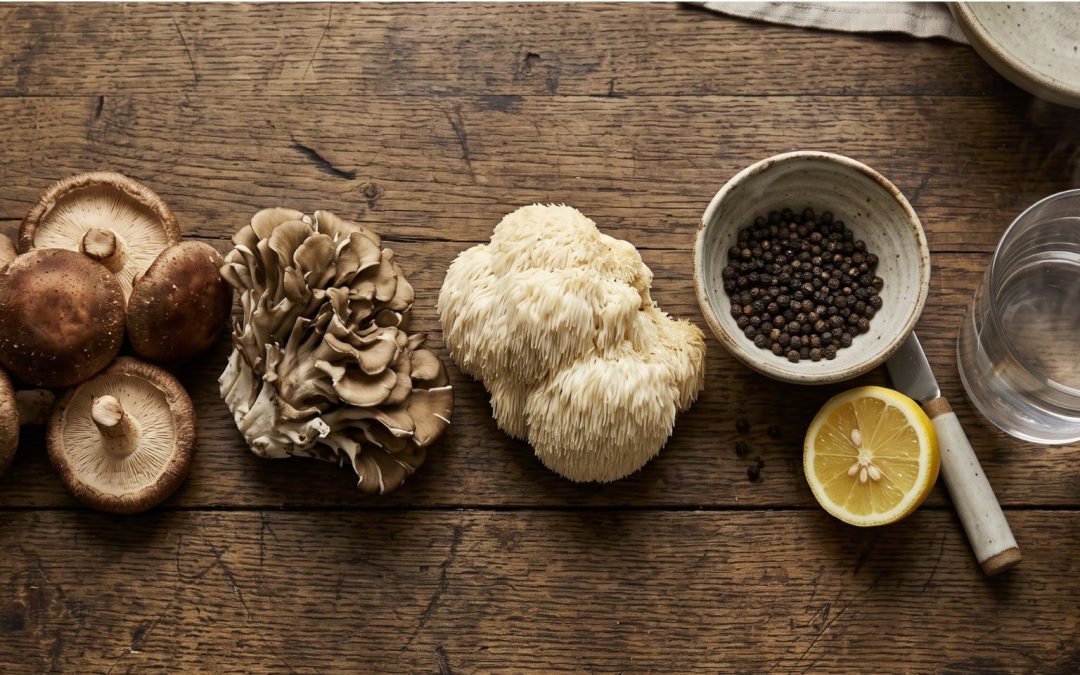
Shiitake (Lentinula edodes)
The kitchen mushroom with clinical credentials. Shiitake contains lentinan, a well-studied beta-glucan, plus a compound called AHCC (Active Hexose Correlated Compound) shown in multiple studies to increase T-cell and NK cell activity. A randomized controlled trial published in the Journal of the American College of Nutrition found that eating shiitake mushrooms daily for four weeks measurably improved immune cell function and activation markers in healthy adults. This one belongs in your weekly shopping, not just your supplement cabinet.
Maitake (Grifola frondosa)
Contains D-fraction beta-glucans shown to activate macrophages, dendritic cells, and NK cells. Also has meaningful effects on blood sugar regulation — a detail that becomes particularly relevant when we look at chronic conditions in Part 2 of this investigation.
Turkey Tail (Trametes versicolor)
The most clinically researched of the group. Its two key compounds — Polysaccharide-K (PSK) and Polysaccharide-P (PSP) — have been studied extensively enough that PSK is used as an adjunct therapy in Japan. Beyond its immune-stimulating effects, turkey tail feeds beneficial gut bacteria, which brings us back to where a significant portion of your immune system actually lives: the gut lining.
Lion’s Mane (Hericium erinaceus)
Better known for its nerve growth factor research and cognitive support, lion’s mane also has emerging evidence for gut immune function through its prebiotic effects. Given that roughly 70% of your immune tissue lines the gut wall, supporting the gut microbiome is immune support.
Reishi (Ganoderma lucidum)
The most studied adaptogenic mushroom. Reishi contains both beta-glucans and triterpenoids that modulate immune response and reduce inflammatory burden. It doesn’t rev immunity up — it helps calibrate it. Worth noting: reishi is not a culinary mushroom. It’s bitter, woody, and not something you’ll be sautéing for dinner. This one lives in the supplement aisle, and it’s worth choosing carefully.
🗂️ FROM THE CASE FILES
The mushroom supplement market is crowded and largely unregulated. When choosing a product, look for: mycelium-free fruiting body extracts (not just mycelium on grain), standardised beta-glucan content listed on the label, and third-party testing. A product that doesn’t tell you its beta-glucan percentage is telling you something.
Trusted Sources — Survival Moss
I met Amanie Ayach, founder of Survival Moss, at the White Rock market recently. Her freeze-dried sea moss (Eucheuma cottonii) is one I’ve been looking at closely — particularly for its iodine content (thyroid and immune regulation are more connected than most people realise) and its mucilaginous properties that support gut lining. I’ll be talking with Amanie in more depth on my upcoming podcast, Beyond My Scope. For now: survivalmoss.com if you want to explore it. This is a personal recommendation, not a paid placement — I don’t do those.
Clue #3 — The Morning Ritual Worth Taking Seriously
Before any supplement enters the picture, there are a few daily habits that cost almost nothing and support your immune system from the ground up.
Warm water with freshly squeezed half a lemon, first thing.
This one gets dismissed as folk wellness. It shouldn’t be. Here’s what it’s actually doing:
The warm water stimulates peristalsis — the gentle muscular movement that gets your digestive system moving after a night of rest. The lemon’s mild acidity helps thin and shift morning mucous, which is your body’s overnight accumulation of the mucus that lines your respiratory and digestive tracts — your first physical barrier against pathogens. It also gently stimulates bile production, which supports liver function and fat metabolism. The small amount of vitamin C, even from half a lemon, primes early immune signalling. And it hydrates you before coffee has a chance to do the opposite.
It doesn’t need to be complicated. Warm water. Half a lemon. Freshly squeezed. Every morning.
Fermented foods and prebiotic fibre — together.
Fermented foods (yoghurt, kefir, sauerkraut, kimchi, miso) bring beneficial bacteria. Prebiotic fibre (onions, garlic, leeks, oats, slightly green bananas) feeds them. Together they produce short-chain fatty acids that strengthen the gut barrier and help train your immune response. Separately, they underperform.
Garlic — and not just for the flavour.
Allicin, the compound released when garlic is crushed or chopped, has genuine antimicrobial and immune-modulating properties. Let chopped garlic sit for ten minutes before cooking to allow allicin to fully form. Add it late in cooking to preserve more of the active compounds.
Ginger and bone broth when symptoms start.
Ginger contains gingerols and shogaols — compounds with anti-inflammatory and antiviral properties. Fresh ginger in hot water with lemon is not a cure, but it’s not nothing either. Bone broth provides glycine and proline to support the gut lining, plus minerals in a highly bioavailable form.
How many mornings do you reach for coffee before anything else? Even just moving the lemon water to first — before the coffee — shifts the sequence your body starts the day with. It takes about thirty seconds. That’s the whole ask.
Clue #4 — The Nutrients Your Immune System Is Counting On
Food comes first. Always. But a few specific nutrients deserve mention — not because a supplement replaces food, but because deficiency in any of these measurably affects immune function.
Vitamin D
More accurately a hormone than a vitamin, vitamin D has receptors on virtually every immune cell. Deficiency is associated with increased susceptibility to respiratory infections. In Canada, meaningful sun exposure for vitamin D synthesis is essentially gone from October through April. Food sources include fatty fish (salmon, mackerel, sardines), egg yolks, and fortified foods — but for most Canadians, food alone doesn’t close the gap through winter. If you haven’t had your levels checked recently, this is the season to do it. The bioavailable supplement form is D3 (cholecalciferol), ideally taken with a meal containing fat and alongside magnesium, which is required for vitamin D to be activated and used.
Zinc
Critical for the development and function of immune cells, including NK cells and T-cells. Zinc also has direct antiviral properties — it inhibits viral replication in the upper respiratory tract, which is why zinc lozenges at the first sign of a cold have some evidence behind them. Food sources: oysters (the richest source), red meat, pumpkin seeds, legumes, hemp seeds.
Vitamin C
The immune nutrient everyone reaches for — and it does have a genuine role, particularly in supporting white blood cell function and reducing the duration of colds. What it doesn’t do is prevent infection entirely. Food sources: red bell peppers (higher in vitamin C than oranges, per gram), kiwi, broccoli, citrus. If supplementing, look for calcium ascorbate or liposomal vitamin C for better absorption than standard ascorbic acid at higher doses.
Clue #5 — When Home Care Isn’t the Whole Answer
Home remedies and nutritional support are genuinely useful. They are not a replacement for medical care when symptoms cross certain lines.
Seek medical attention if you notice:
- Fever above 39.4°C (103°F) or a fever that returns after seeming to resolve
- Difficulty breathing or shortness of breath
- Symptoms that improve and then sharply worsen — this pattern can indicate a secondary infection
- Confusion, extreme fatigue, or difficulty staying awake
- Symptoms lasting more than ten days without improvement
- Chest pain or pressure
And one more thing worth raising before we close this case. There’s a group of people for whom cold and flu season carries a higher risk than most of them realize — people managing chronic conditions like Type 2 diabetes or Crohn’s disease who feel relatively stable and assume that means their immune system is operating normally.
It isn’t. And that story deserves its own investigation. That’s exactly where we’re headed in Part 2.
Closing the Case
October has arrived, and so has the season that tests what your immune system has been building all year.
The good news: you have more influence over this than the pharmacy aisle suggests. The warm water and lemon is a real start. The shiitake in your pan is doing something. The fermented foods and the fibre — they matter. These aren’t dramatic interventions. They’re the kind of quiet, consistent support that keeps your body’s first-response team ready to do its job.
Your body is not random. It’s methodical. And the evidence, as always, can be read.
📎 Your Next Clue
Download the First Defence Protocol — a practical guide to your daily immune foundations, home remedies worth keeping, and the signs that tell you to reach for more than a cup of ginger tea.
And watch for Part 2 — because if you’re managing a chronic condition and you think stable means protected, we need to talk.

More to Explore
5 Smart Food Pairings for Better Nutrient Absorption
Decode the viral food-pairing post — and uncover the gentle seasonal reset underneath: five smart nutrient pairings, and the humble fibre that clears the way.

What You’re Really Carrying: The Hidden Weight Behind “Hands-Free”
Uncover how the bags, phone cords, and earbuds you wear every day quietly load your neck and spine — and what the evidence says about fixing it.
You Are What You Absorb: The Truth About Soil, Metals, and Hormones
Decode the real truth behind “you are what you eat.” Uncover how soil, heavy metals, and fulvic acid quietly shape your hormones, digestion, and energy.