
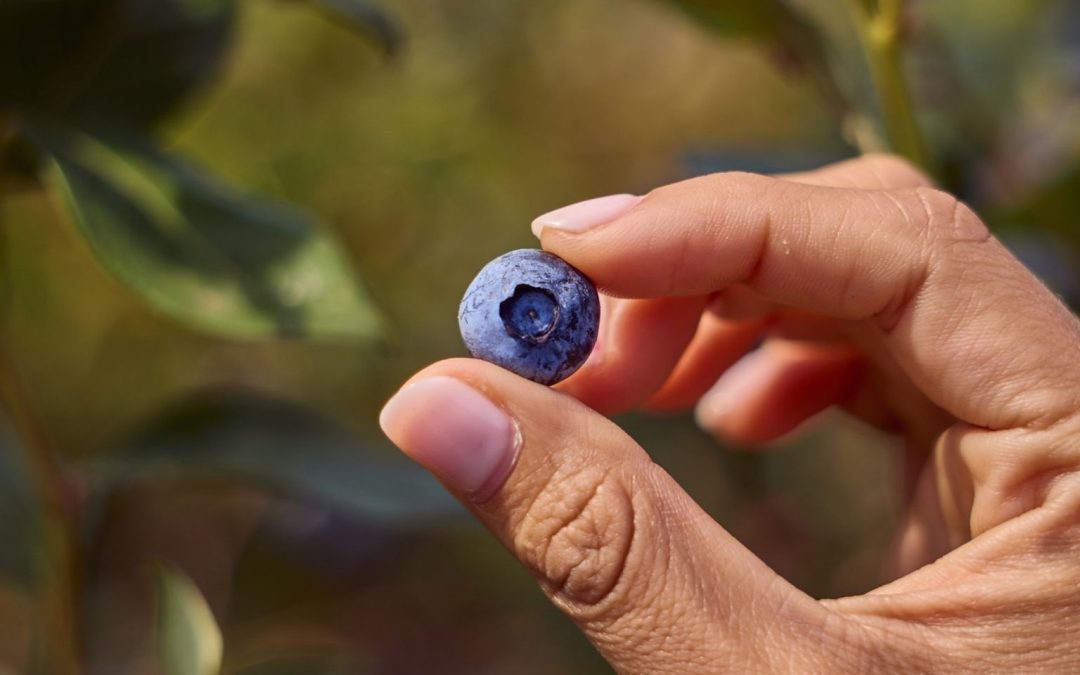
Image courtesy of Shire Farms.
Opening the Case
So why write about them? Because the most interesting research on blueberries hasn’t been done on twenty-somethings. It’s been done on women in perimenopause and after menopause. And what it shows goes well beyond “they’re full of antioxidants.”
This isn’t about adding one more thing to your list. It’s about understanding what’s really happening in your body as estrogen shifts, and why a small handful of berries a day speaks to some of those changes directly.
Blueberries are a smart choice at any age. But if you’re anywhere in the menopause transition, from the first irregular cycles through to years after your last period, the evidence suggests they matter even more. Let’s look at why.
Clue #1: What Estrogen Was Quietly Doing for Your Blood Vessels
Your blood vessels are lined with a thin layer of cells called the endothelium. Think of it as the vessel’s control panel. It decides when to relax and widen, and when to tighten.
Its main tool is nitric oxide, a gas that tells the vessel wall to relax. Relaxed vessels mean easier blood flow and lower pressure.
Estrogen helps the endothelium make nitric oxide. It also helps keep oxidative stress in check. Oxidative stress is the wear and tear caused by unstable molecules called free radicals, and it uses up nitric oxide fast.
As estrogen declines, that protection fades. Nitric oxide drops, oxidative stress climbs, and arteries tend to stiffen. This is a big part of why blood pressure often creeps up after menopause, even when nothing else in your life has changed.
This is where blueberries come in. They’re rich in anthocyanins, the deep blue-purple pigments that belong to a larger family of plant compounds called polyphenols. Anthocyanins appear to support nitric oxide and calm oxidative stress inside the vessel wall.
In a randomized, double-blind, placebo-controlled trial published in the Journal of the Academy of Nutrition and Dietetics, 48 postmenopausal women with elevated or stage 1 high blood pressure took either 22 g of freeze-dried blueberry powder a day (about one cup of fresh berries) or a placebo for eight weeks. In the blueberry group, average systolic pressure fell from 138 to 131 mm Hg and diastolic from 80 to 75 mm Hg. Arterial stiffness dropped by 6.5%, and nitric oxide levels rose. The placebo group saw no change.
A 12-week trial in Food & Function followed women aged 45 to 65 using the same daily amount. This time, blood pressure didn’t change significantly. But endothelial function, the vessel’s ability to relax on demand, improved. The researchers traced that improvement to lower oxidative stress.
Two studies, slightly different results, and that’s worth being honest about. Both were small, and both were funded in part by the blueberry industry. But both were properly controlled, and both point the same way: daily blueberries helped the blood vessel lining work better in women whose estrogen had dropped. Think of it as support for the system, not a replacement for blood pressure care.
Clue 2: Brain Fog, Blood Sugar and the Midlife Connection
You walk into a room and forget why. You lose a word mid-sentence in a meeting. You read the same email three times. Many women notice this in perimenopause, and it’s real.
Estrogen helps the brain use glucose, its main fuel. It also supports insulin sensitivity, which is how well your cells respond to insulin and take in sugar from the blood. As estrogen shifts, insulin sensitivity often drops. Weight tends to settle around the middle, and energy can feel less steady through the day.
That matters for the brain. When cells stop responding well to insulin, the body pumps out more of it to compensate. High insulin over time is linked to a higher risk of memory problems later in life.
A randomized controlled trial in the journal Nutrients tested blueberries in exactly this group. Researchers enrolled men and women aged 50 to 65 who carried extra weight, had signs of insulin resistance, and had noticed their own memory slipping. They took freeze-dried blueberry powder or a placebo daily for 12 weeks.
The blueberry group did better on tests of word retrieval and on filtering out distracting information while learning. They also reported fewer everyday memory slips. And their insulin levels came down, which suggests their cells were responding better.
This was a small study, and a 12-week result doesn’t tell us about dementia decades later. But it does suggest blueberries support two things that change together in midlife: how the brain handles information and how the body handles sugar.
If you’ve been blaming yourself for forgetting names or losing your train of thought, it’s worth looking at the whole picture. Sleep, stress, blood sugar and hormones all feed into it. A daily handful of berries won’t fix poor sleep. But paired with protein at breakfast and steady meals, it’s one small, practical way to support both your brain and your blood sugar.
Clue 3: Your Bones, and Why More Isn’t Better
Bone is living tissue. Every day, some is broken down and some is rebuilt. Estrogen keeps the breaking-down side in check.
When estrogen falls, that balance tips. Bone loss speeds up in the years around menopause, and oxidative stress plays a part. It ramps up the cells that dissolve bone and slows the cells that build it.
Researchers wanted to know whether blueberry polyphenols could help hold that line. In a randomized crossover trial published in 2023, healthy women at least four years past menopause tried three daily amounts of freeze-dried blueberry powder for six weeks each. The amounts matched roughly 3/4 cup, 1 1/2 cups and 3 cups of fresh berries. The team tracked how much calcium their bones held on to.
Here’s the twist. The smallest amount worked best, improving bone calcium retention by 6%. The middle amount improved it by 4%. The largest amount had no significant effect at all.
The researchers expected the opposite. More berries, more benefit. Instead, they found what scientists call a hormetic response: a sweet spot where a moderate amount helps and more doesn’t add anything.
It was a small study of 14 women, so it’s a clue rather than a verdict. But it lines up with a simple principle. You don’t need a bowlful. A modest daily amount, eaten consistently, appears to be the point.
🗂️ FROM THE CASE FILES
Blueberries aren’t a bone treatment. Calcium, vitamin D, protein and strength training remain the foundation, and bone density testing is worth asking your doctor about. What this study adds is a reason to think of berries as a small, steady daily habit rather than a big occasional serving.
Clue 4: Fresh, Frozen or Freeze-Dried? Why a Small Handful Is Enough
Freeze-drying removes the water and leaves almost everything else behind, including the anthocyanins. That’s why just 22 g of the powder matches about one cup of fresh berries. Researchers use it because the dose stays consistent and the berries keep well.
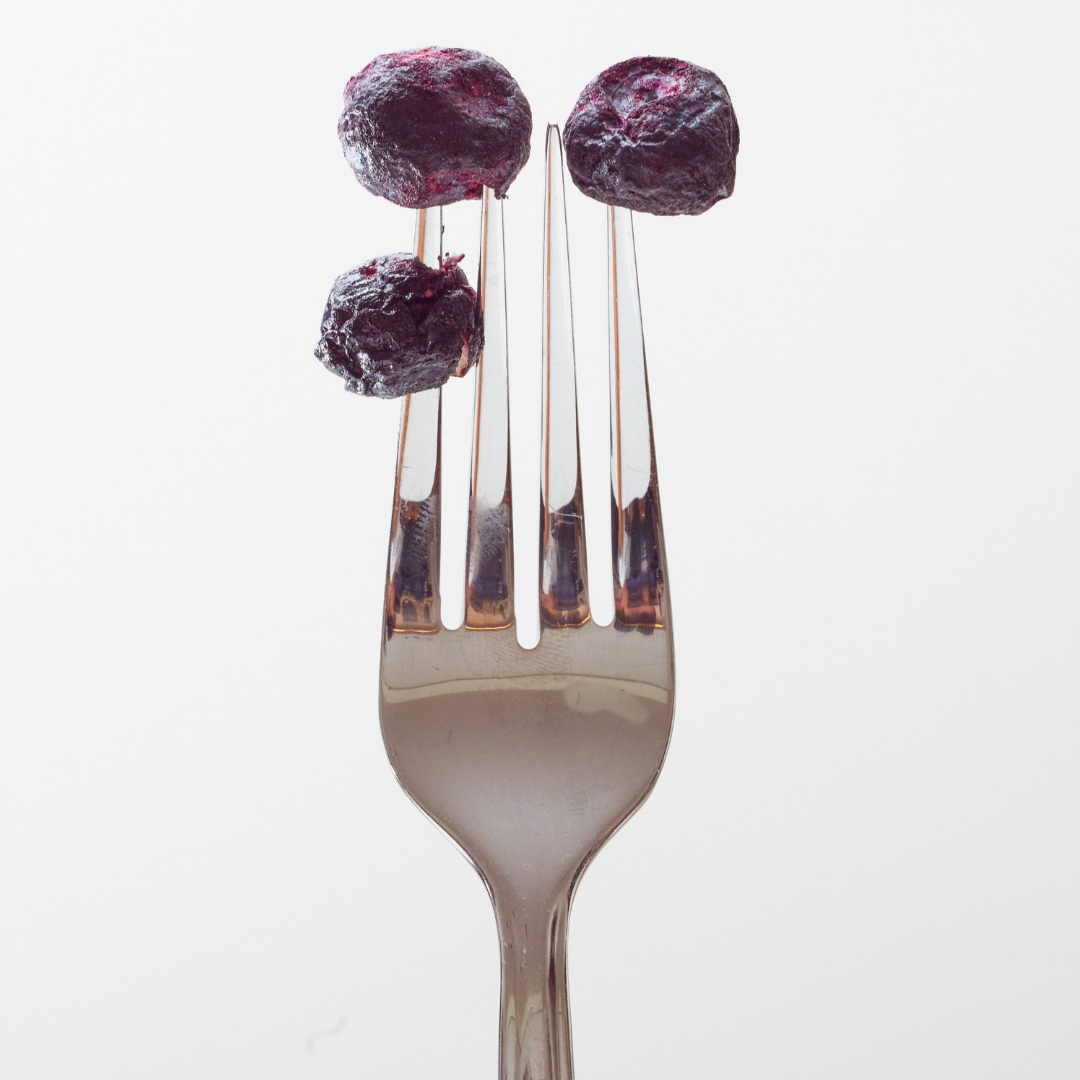
Fresh and frozen blueberries are excellent too. Frozen berries are picked and frozen at their peak, so they’re a reliable choice through a Canadian winter. Freeze-dried berries add something the others can’t: you can toss a pouch in your bag and have them at your desk, in the car, or on a plane.
That concentration is also why portion matters. Because the water is gone, the natural sugars are concentrated too. A big bowl of freeze-dried berries goes down easily and adds up quickly. A small handful gives you the polyphenols without the sugar load, and the bone research suggests more doesn’t add benefit anyway. For scale, one 20 g pouch is close to the daily amount used in the heart and bone studies. A small handful in the morning and another later on keeps you well within that range.

Meet Shire Farms. Shire Farms grows certified organic blueberries on a single farm in BC’s Columbia Valley, between two mountain ranges and fed by glacial lakes and rivers. Cool nights and warm summer days suit blueberries well. The berries are freeze-dried right after harvest, and only the water comes out. Each 20 g pouch holds about 130 g of fresh berries, just under a cup.
What I look for in any freeze-dried berry is simple: the ingredient list should say blueberries and nothing else. No added sugar, no oil, no sweetened coatings. Shire’s label lines up with that. A 20 g pouch has 70 calories, 3 g of fibre and 12 g of sugar, close to what you’d find in the same amount of fresh berries. And the pouch confirms it: 100% organic blueberries, with nothing added.
Here are three easy ways to use them, courtesy of the Shire Farms team:
- Smoothie: blend a small handful with plain Greek yogurt and a handful of spinach. The yogurt adds protein and the spinach adds folate and magnesium.
- Overnight oats: crush them into your oats the night before. They soften as they sit and turn the whole jar a deep violet. Get the full recipe in The Blueprint Kitchen: Blueberry Overnight Oats
- Salad: fold a small handful into arugula with goat cheese and walnuts. The walnuts bring omega-3 fats, and the tart berries balance the peppery greens.
I first tried Shire Farms’ organic freeze-dried blueberries through a free sample offer. I love them, and I recommend them to clients, especially those who travel, because they’re so convenient. This isn’t a paid feature, and I don’t earn anything from their sales.
Clue 5: The Supporting Cast, and When to Get Checked
Blueberries work best as part of a team. Here’s what supports the same systems, food first, with supplement forms noted for anyone working with a practitioner.
For your blood vessels
- Potassium balances sodium and helps blood vessels relax. Find it in white beans, potatoes with the skin on, avocado, spinach and plain yogurt.
- Magnesium helps the muscle in your vessel walls relax and is used up faster under stress. Find it in pumpkin seeds, almonds, black beans and leafy greens. If supplementing, magnesium glycinate is well absorbed and gentle on digestion.
- Omega-3s (EPA and DHA) help calm inflammation in the vessel lining. Find them in salmon, sardines, mackerel and herring, two to three times a week. If supplementing, the triglyceride form absorbs better than ethyl ester.
For your bones
- Calcium is the raw material. Food sources like yogurt, kefir, canned salmon with bones, tofu set with calcium and fortified plant drinks are best absorbed spread through the day.
- Vitamin D3 helps you absorb that calcium. In much of Canada, the sun is too weak to make enough from about October to April. Ask for a blood test rather than guessing your dose.
- Vitamin K2 (as MK-7) helps direct calcium into bone. Find it in aged cheeses, egg yolks and natto.
- Protein forms the framework bone is built on. Aim for some at every meal.
For your brain and blood sugar
- Protein and fibre at breakfast steady blood sugar for hours. Pairing berries with Greek yogurt or eggs works better than berries alone.
- B6 as P5P (pyridoxal-5-phosphate) is the active form your brain uses to make serotonin and dopamine, the messengers behind mood and focus. Find it in salmon, chickpeas and potatoes.
- B12 as methylcobalamin is ready for your body to use, unlike cyanocobalamin, which needs converting. Absorption tends to drop with age and with acid-reducing medications. Find it in fish, eggs, meat and dairy.
- Folate as methylfolate (5-MTHF) works with B12 to support brain chemistry. Find it in leafy greens, lentils and asparagus.
For elimination
Fibre gives your gut bacteria something to work with. They turn blueberry polyphenols into smaller compounds your body can absorb, and they help clear used-up hormones through your bowels. Oats, ground flax, chia, beans and lentils are easy places to start.
Red flags: when to see your doctor
- Blood pressure readings that are consistently higher than they used to be. Home monitors are inexpensive and worth having.
- A severe headache with high blood pressure, chest pain, shortness of breath, or sudden changes in vision or speech. These need emergency care.
- Memory changes that are getting worse, that others are noticing, or that include getting lost in familiar places.
- A fracture from a minor fall, losing height, or a new curve in your upper back.
- You take a blood thinner such as warfarin. Keep your intake of leafy greens and berries consistent rather than changing it suddenly, and talk to your prescriber first.
- You take medication for blood pressure or blood sugar, or you have kidney disease. Check before adding supplements, especially potassium or magnesium.
Closing the Case
The evidence here is consistent, if still small. In women whose estrogen has dropped, a daily serving of blueberries helped blood vessels relax, supported memory and insulin, and nudged bones to hold on to calcium. And in the bone study, the smaller amount did the most.
That’s the real takeaway. This isn’t about a superfood or a big change. It’s a small handful, most days, alongside the basics that matter most: protein, fibre, movement, sleep and regular check-ups. If you’d like an easy place to start, my Blueberry Overnight Oats recipe takes five minutes the night before.
Menopause changes the rules your body has been playing by for decades. Knowing which systems are shifting means you can choose foods that meet them where they are. If someone you care about is in the middle of this transition, a pouch of berries and this article might be a good conversation starter.
📎 Your Next Clue
Blueberries are one piece of a bigger picture. When Your Hormones and Your Life Collide is my free guide to what’s shifting in your body through the menopause years, and what you can do about it, starting this week.
This information is shared by a Registered Nutritional Therapist (RNT) for educational purposes and doesn’t constitute medical advice. It can’t replace personalized care. Always consult your healthcare providers about your symptoms and any health concerns.

More to Explore
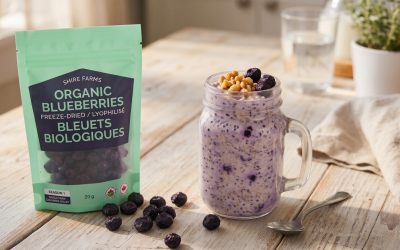
Blueberry Overnight Oats
The comfort of childhood porridge, made the night before. Freeze-dried blueberries soften overnight, turn the jar violet and sweeten it with no added sugar.

Low Iron, Foggy Brain: The Genetic Clues Behind Anemia
Low iron on a good diet? Uncover how your genes, a hidden gatekeeper hormone and vitamin B12 decide what reaches your blood, and why it matters for your brain.
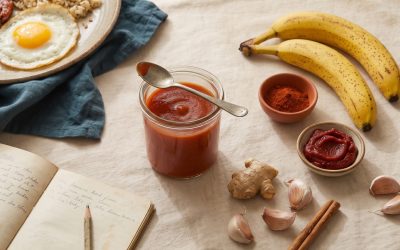
Healthy Homemade Banana Ketchup (Lower Sugar, No Red Dye)
A healthy homemade banana ketchup inspired by María Orosa’s classic. Sweetened with ripe bananas, no added sugar or red dye, and warmly spiced.
THE HEALTH DETECTIVE
Helping women 45+ uncover the clues behind fatigue, digestion changes, sleep struggles, and other signals the body sends — so they can create a clear blueprint for vibrant living.
Stay Connected
Every symptom tells a story.
Case File Index
clues [at] thehealthdetective.ca
Working with clients in Canada and across the globe.
Ready to Decode Your Health Story?
If your body has been leaving clues — fatigue, digestion changes, sleep disruptions — we can explore what they may be pointing to.
In a relaxed one-to-one conversation we step back, connect the dots, and decide whether working together feels like the right next step.
Your first step is simply a conversation.
© 2026 The Health Detective | The Wellness Blueprint: Life by Design. All Rights Reserved.