Go Back
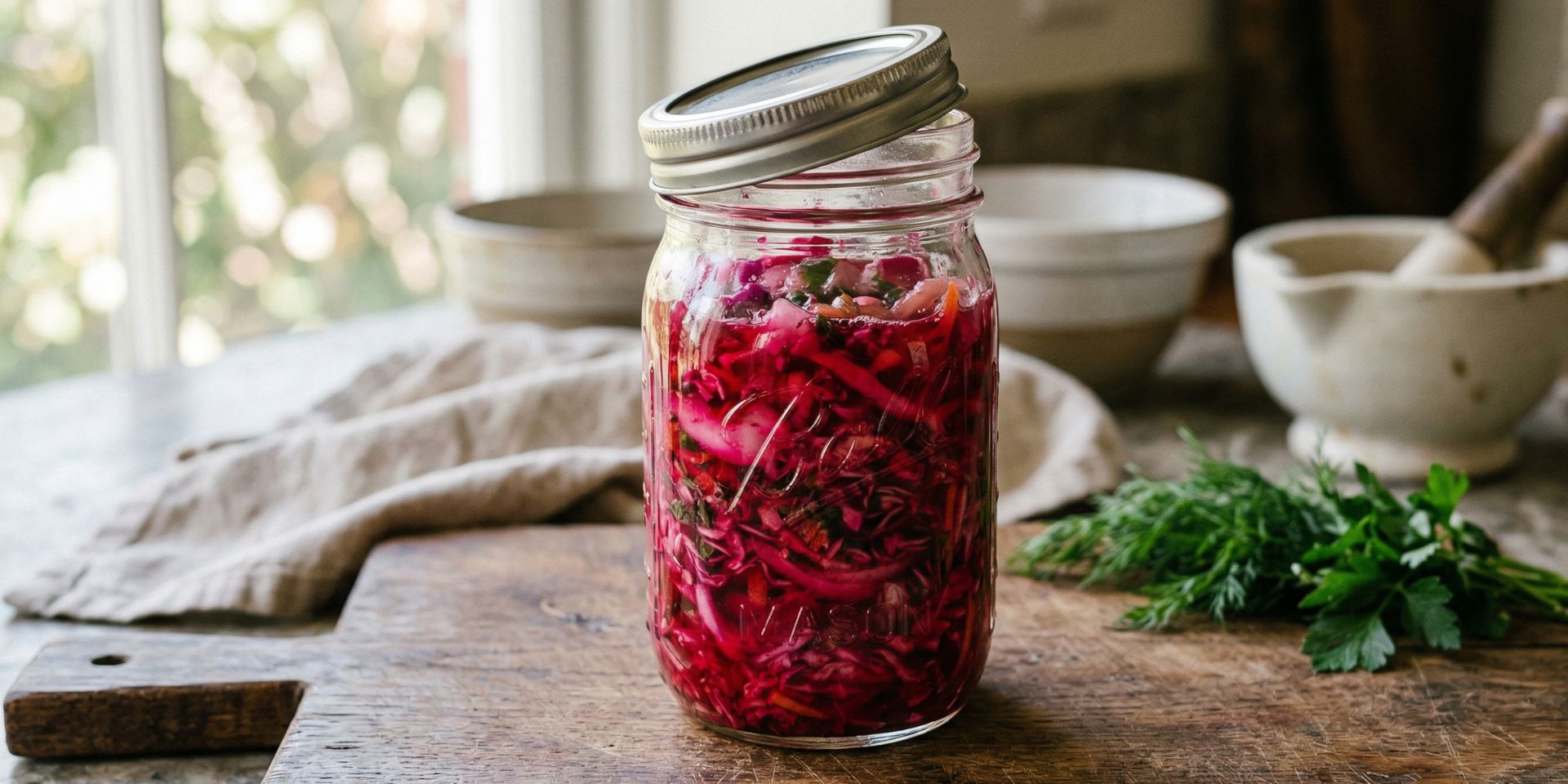
Fermented beet and cabbage slaw in a glass mason jar on a wooden kitchen surface, showing vibrant pink and purple colours from the beet and red cabbage
Celine | The Health Detective

Fermented Beet and Cabbage Slaw

A simple, no-cook fermented slaw made with earthy beets and crisp cabbage. The natural fermentation process produces live cultures that support a healthy gut microbiome — which, as Case #11 reveals, is deeply connected to body odour, skin clarity, and digestive comfort. It takes about 10 minutes to prep and a few days of patience. Your gut will thank you.
Prep Time 15 minutes
Servings: 8 side dish/condiment
Course: Condiment, Side Dish
Cuisine: Condiment, Whole Foods

Ingredients
  

  • 2 cups green cabbage thinly shredded
  • 1 cup red cabbage thinly shredded
  • 1 medium raw beet peeled and grated
  • 1 medium carrot grated
  • 1 tsp caraway seeds (optional — supports digestion)
  • 1 tsp fine sea salt (non-iodised — iodine can inhibit fermentation)
  • 1/2 tsp ginger freshly grated
  • Filtered or non-chlorinated water as needed to top up

Method
 

  1. Combine the vegetables. In a large bowl, add the shredded green cabbage, red cabbage, grated beet, and grated carrot. Toss together well.
  2. Salt and massage. Sprinkle the sea salt over the vegetables. Using clean hands, massage and squeeze the mixture firmly for 5–8 minutes. You're looking for the vegetables to release their liquid and start to soften. Don't rush this step — the brine is what protects your ferment.
  3. Add flavour. Mix in the grated ginger and caraway seeds if using.
  4. Pack the jar. Transfer the mixture into a clean 1-litre mason jar, pressing everything down firmly so the vegetables are submerged in their own liquid. Leave about 2–3 cm of space at the top.
  5. Top up if needed. If the liquid doesn't fully cover the vegetables, mix ¼ tsp salt into ½ cup filtered water and pour in just enough to submerge everything.
  6. Weigh it down. Place a small zip-lock bag filled with brine, or a clean stone, on top of the vegetables to keep them submerged. This prevents mould.
  7. Ferment at room temperature. Cover loosely with a cloth or loosely-fitted lid and leave on your kitchen counter, out of direct sunlight, for 3–5 days. Taste daily from day 3. The longer it sits, the more sour and tangy it becomes.
  8. Seal and refrigerate. Once it tastes pleasantly tangy to you, seal the jar and store in the fridge. It will keep for up to 3 weeks.
Notes

🍳 Notes for the Cook

  • On the salt: Always use non-iodised sea salt or kosher salt. Iodised table salt can kill the beneficial bacteria before fermentation even begins.
  • On the water: Tap water with chlorine can also interfere with fermentation. If that's all you have, let it sit in an open jug for 30 minutes before using — the chlorine will off-gas.
  • Signs of a happy ferment: Tiny bubbles, a pleasantly sour smell, brine that looks slightly cloudy. These are all good signs.
  • Signs to toss it: Fuzzy mould (not just white film on top, which is kahm yeast and is harmless), a foul or putrid smell (not just sour). When in doubt, throw it out and start again.
  • How to eat it: Serve alongside eggs, grain bowls, grilled fish, wraps, or eat a small forkful straight from the jar before meals as a digestive primer.
  • Liver love: Beets contain betaine and folate, both of which support healthy liver detoxification — one reason this slaw does double duty beyond just probiotics.